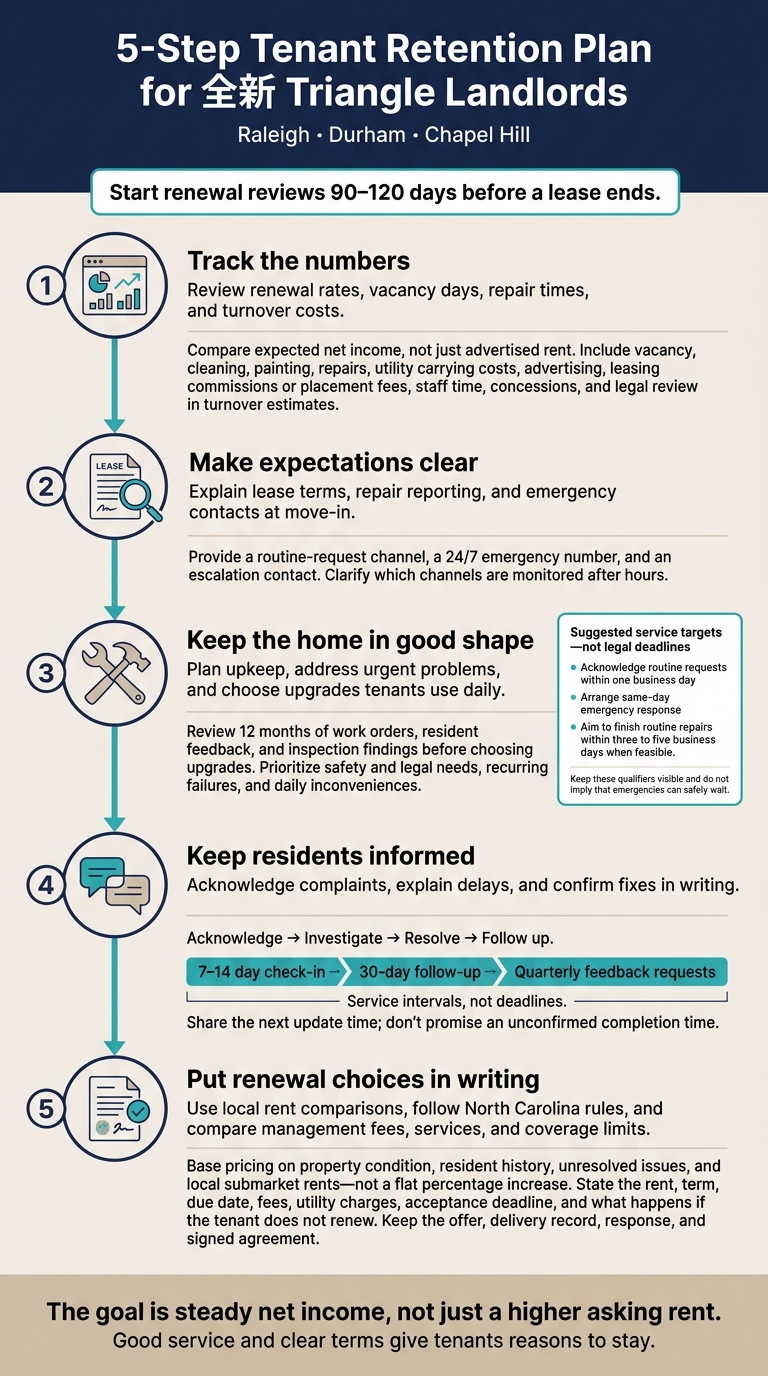
I recommend starting renewal reviews 90–120 days before a lease ends – and comparing the full cost of turnover with the income from keeping your tenant. For Raleigh, Durham, and Chapel Hill landlords, that means looking beyond rent to repairs, vacancy days, leasing fees, and resident concerns.
My approach comes down to five steps:
- Track the numbers: Review renewal rates, vacancy days, repair times, and turnover costs.
- Make expectations clear: Explain lease terms, repair reporting, and emergency contacts at move-in. This clarity helps in avoiding eviction by setting clear boundaries early.
- Keep the home in good shape: Plan upkeep, address urgent problems, and choose upgrades tenants use daily.
- Keep residents informed: Acknowledge complaints, explain delays, and confirm fixes in writing.
- Put renewal choices in writing: Use local rent comparisons, follow North Carolina rules, and compare property management fees, services, and coverage limits.
The goal is <u>steady net income</u>, not just a higher asking rent. Good service and clear terms give tenants reasons to stay.
5-Step Tenant Retention Plan for Triangle Landlords
Maintenance, Upgrades, and North Carolina Repair Duties
Fast repairs and regular upkeep give residents reasons to renew. Chapter 42 covers required landlord-supplied systems and appliances, including electrical, plumbing, sanitary, heating, ventilation, and air-conditioning equipment. Smoke alarms must work at the start of each tenancy. Landlords must repair or replace them within 15 days after written notice of a problem. Imminently dangerous conditions require prompt action based on their severity. Residents need to see that repair work is moving forward.
Record Repair Requests and Address Urgent Problems
After move-in, response speed becomes the next test of resident retention. Treat gas leaks, exposed wiring, sewage backups, active flooding, failed cooling in extreme heat, and broken exterior locks as emergencies. Direct residents to emergency services when their immediate safety is at risk.
Set service targets – not made-up legal deadlines. Acknowledge routine requests within one business day, arrange same-day emergency response, and aim to finish routine repairs within three to five business days when feasible. Require vendors to report delays and any temporary measures they take. If parts hold up a repair, tell the resident when to expect the next update.
Keep a property-file record of each request, including the time received, photos, urgency, acknowledgment, approval, vendor assignment, and access arrangements. Document the work performed, invoices, completion date, and the tenant’s confirmation.
Plan Preventive Maintenance and Inspections
Schedule cooling-system service before summer and heating checks before winter, following manufacturer guidance. After severe weather, check roofs, flashing, gutters, downspouts, and drainage. During planned inspections, check plumbing connections, shutoff valves, water heaters, and visible leaks.
Give entry notice that follows the lease and applicable law, and explain the visit’s purpose and expected length. Record findings, photos, and corrective work without collecting unnecessary personal details.
| Maintenance approach | Timing | Typical cost pattern | Retention benefit |
|---|---|---|---|
| Reactive | After a breakdown or complaint | Unpredictable; emergency labor and secondary damage can increase costs | Fast repairs protect trust, but recurring failures can lead residents not to renew |
| Preventive | Seasonal or manufacturer-recommended schedule | Planned spending; savings depend on equipment and condition | Improves reliability and shows residents that the property is being cared for |
| Inspection-based | Move-in, periodic checks, or after severe weather | Inspection costs plus targeted repairs | Finds problems before they inconvenience residents and creates a record of responsibility and follow-through |
Choose Upgrades Tenants Use Every Day
Review 12 months of work orders, resident feedback, and inspection findings before choosing projects. Put safety and legal needs first, followed by recurring failures and daily inconveniences.
Focus on improvements residents use every day: dependable HVAC, efficient appliances, secure locks, working lighting, and durable, moisture-resistant flooring. Compare local quotes, warranty coverage, and repair history rather than assuming an upgrade will save money.
Coordinate installation dates, access, noise, and utility interruptions with residents. After installation, track complaints, repeat repairs, and renewal interest to see what changes.
sbb-itb-aa27f6d
Tenant Communication and Complaint Resolution
Once repair response times are set, focus on how easily residents can reach you – and how soon they get an answer. Both can affect whether they renew.
Set Contact Channels and Check-In Dates
Give residents a written contact guide that lists a routine-request channel, a 24/7 emergency number, and an escalation contact. Make clear which channels staff monitor after hours. Provide an accessible alternative when needed, and treat disability-related requests consistently. Fair-housing rules may require reasonable changes to communication procedures. Texts and emails work well for updates, but they don’t replace the notice methods required by the lease.
Schedule a 7–14 day check-in, a 30-day follow-up, and quarterly feedback requests. These are service intervals, not deadlines. Ask residents about preferred contact times and appointment windows instead of assuming they can wait at home. Clear communication helps renewal conversations go more smoothly and limits last-minute surprises.
Before projects or forecasted severe weather, explain likely disruptions, preparation steps, and emergency contacts. During seasonal HVAC demand, storm outages, or winter freezes, share confirmed facts, temporary options, and the next update time. Don’t promise a completion time you haven’t confirmed. Let residents know promptly if contractor access or appointments change.
Resolve Complaints and Follow Up in Writing
Follow the same steps for every complaint: acknowledge, investigate, resolve, and follow up. This helps keep frustration from turning into a decision not to renew. Tell the resident who owns the case and when to expect a response.
Before deciding responsibility or charges, review the lease, past communications, and vendor findings. Explain your decision in plain language, confirm the fix in writing, and ask whether any concerns remain.
If the promised response window passes, give residents a named manager they can contact and a way to request a written review under the original case number. Keep emergency reporting separate. Explain when residents may contact local code enforcement about an unresolved safety or code issue, and don’t retaliate against protected activity.
Give owners a monthly summary of overdue cases, recurring issues, costs, and delays. Share sensitive information only with those who need it.
Renewals, Rent Changes, and Lease Options
As a lease nears expiration, review the tenant’s payment history, maintenance issues, unresolved complaints, lease compliance, and feedback. Also assess the property’s condition, expected capital repairs, and submarket rents. Use comparisons from Raleigh, Durham, Chapel Hill, or nearby Triangle communities – not a regional average – to judge turnover risk.
Check the lease’s expiration date, notice requirements, and renewal, holdover, and automatic-renewal provisions. Base the renewal offer on these facts, not a flat percentage increase.
Compare Rent Increases With Turnover Costs
Compare expected net income, not just advertised rent. Account for vacancy, cleaning, painting, repairs, utility carrying costs, advertising, leasing commissions or placement fees, staff time, concessions, and legal review. Factor in the risk that the next tenant may be less reliable.
The numbers will vary by market, season, and leasing costs. A smaller increase or documented incentive may protect net income and keep a reliable tenant in place. Once you settle on pricing, put the lease terms in a clear written offer.
Review Lease Terms and North Carolina Notice Rules
Renewal offers, termination notices, and rent-change notices serve different purposes. Treat them as separate documents. If the lease is silent, North Carolina’s default notice periods generally run one month for year-to-year tenancies, seven days for month-to-month tenancies, and two days for week-to-week tenancies, effective at the end of the rental period.
Check the agreement for other procedures or deadlines. Following notice requirements keeps the renewal process clear and helps avoid preventable nonrenewals. A fixed-term lease ordinarily controls rent through expiration. Changes should apply going forward under the lease or at a lawful renewal or transition to a periodic tenancy.
The written offer should state the rent, term, due date, fees, utility charges, acceptance deadline, and what happens if the tenant does not renew. Identify whether the offer is fixed-term or periodic. Explain how the security deposit and maintenance responsibilities will be handled, and whether holdover, automatic-renewal, late-fee, or early-termination provisions remain unchanged.
Keep the offer, delivery record, response, and signed agreement. Apply consistent fair-housing criteria and document objective reasons for proposed terms or nonrenewal. North Carolina also recognizes retaliatory-eviction protections when a rent change or nonrenewal follows protected complaint activity.
Put Lease Options and Renewal Incentives in Writing
Give tenants specific choices: a 12-month renewal, a shorter fixed term with a stated rate, a month-to-month option with defined pricing, or a transfer to another property owned by the same owner, when available.
For transfers, document eligibility, application or screening requirements, deposit transfers, move dates, utility changes, and any transfer fee. Early-termination options should spell out required notice, reletting obligations, fees or damages allowed by the lease and law, and whether qualifying statutory protections apply. Use the same written renewal process across the portfolio so terms are delivered consistently.
Possible incentives include a one-time credit, minor upgrade, professional cleaning, parking benefit, or preventive maintenance visit. Set eligibility rules before making the offer, such as signing by a stated date, having no unresolved lease violations, and keeping the account current. Apply the same criteria to comparable residents, subject to required accommodations.
Record the incentive’s dollar value, delivery date, conditions, accounting method, and treatment if the tenant breaks the renewal. Include these details in the signed renewal or an addendum.
Flexibility does not replace accommodation duties. Assistance animals are not pets, and pet fees do not apply.
Property Management and Your Retention Plan
Once renewal terms are set, create one property file per unit and review it monthly for issues that could affect renewals. Keep the lease, tenant contacts, screening documents, payment history, repair requests, inspection reports, invoices, notices, renewal dates, and tenant feedback together. Give every unresolved issue an owner and a due date.
Your management partner should use those records to guide daily work.
Coordinate Tenant Retention With Unicorn Rentals
Unicorn Rentals serves residential properties in Raleigh, Durham, Chapel Hill, and the Triangle. It supports retention planning through maintenance coordination, inspections, reporting, and renewal follow-up.
Use these processes to track responses, record completed work, and follow up on open tasks. They don’t guarantee renewals or instant repairs. Before signing, confirm communication channels, repair approval limits, emergency procedures, vendor response times, documentation, and renewal follow-up.
Compare Unicorn Rentals Management Plans
Look beyond the monthly fee. Compare services, coverage, inspection frequency, renewal support, and exclusions. The published plans list these terms:
| Plan | Monthly management fee | Services and benefits |
|---|---|---|
| Standard | 10% of monthly rent | Marketing, tenant placement, screening, rent collection, 24/7 maintenance coordination, financial reporting, and move-in/move-out inspections; $350 renewal fee; 15% repair markup fee. |
| Value+ | 13% of monthly rent | Standard services plus coverage for rent loss, eviction, malicious damage, and liability; $200 renewal fee; no repair markup fees. |
| Premium Concierge | 15% of monthly rent | Value+ features plus included lease renewals, discounted tenant placement, no repair markup fees, and preventive maintenance inspections. |
Coverage has conditions and limits. The published Value+ description requires a $1,500 minimum monthly rent for its protection package. Confirm current pricing, portfolio discounts, eligibility, exclusions, coverage limits, deductibles, fees, and contract terms directly with Unicorn Rentals. Also ask exactly what “included renewals” and “no repair markup fees” cover.
Conclusion: Put Your Retention Plan Into Practice
Audit the past year’s turnover costs and fix gaps in service. Use repair records and tenant feedback to decide which upgrades come first.
Assign people and deadlines for repairs and renewal reviews 90–120 days before lease expiration. Set responsibilities and deadlines for the owner’s review of financial and maintenance reports, major approvals, renewal pricing, and inspection documentation.
FAQs
What tenant retention rate should I aim for?
Aim to keep your retention rate consistently above the market average. In the Triangle, prompt maintenance, regular communication before issues arise, and effective lease renewal programs can help you reach rates 15–20 percentage points above that average.
Turnover costs average $3,800 in Durham and $2,500 in Raleigh. Keeping more tenants helps steady your income while avoiding vacancy and re-leasing costs.
How do I calculate my break-even renewal rent?
Compare annualized turnover costs – lost rent, marketing and leasing expenses, and turnover repairs – with the annual savings from renewing instead of switching tenants. Turnover costs are commonly estimated at $1,000–$5,000 per unit per incident.
Effective break-even renewal rent = current renewal rent + (turnover cost ÷ months remaining in the lease × 12).
For a more accurate estimate, use your projected months of lost rent and expected repair and marketing costs.
How should I handle a renewal during an unresolved repair?
Address the repair first. Give the tenant one consistent point of contact who can explain the repair’s status, next steps, and specific timeline. Keep a written record of discussions, preferably by email.
Let the tenant know when to expect responses, schedule the contractor, and check in after the work is complete to confirm they’re satisfied.
If you offer renewal incentives, tie them to resolving the repair. Or offer a short-term goodwill option while work is underway so the tenant doesn’t feel ignored.