In Durham’s growing rental market, effective tenant communication is more important than ever. With a population increase of 12.3% since 2020 and a median rent of $1,850 as of 2025, landlords face rising expectations. Clear communication not only ensures compliance with laws like Durham’s Fair Housing Ordinance but also reduces costly tenant turnover, averaging $3,800 per instance. Here’s what you need to know:
- Legal Compliance: Follow North Carolina’s notice periods for lease terminations and Durham-specific rules, such as expanded Fair Housing protections.
- Best Practices: Use clear, timely, and professional communication. Establish response time standards, like 30 minutes for emergencies and 24 hours for routine issues.
- Move-In Tips: Start strong with a welcome email, check-ins, and clear instructions to build trust.
- Technology: Leverage tools like online portals for rent payments, maintenance requests, and automated reminders to streamline operations.
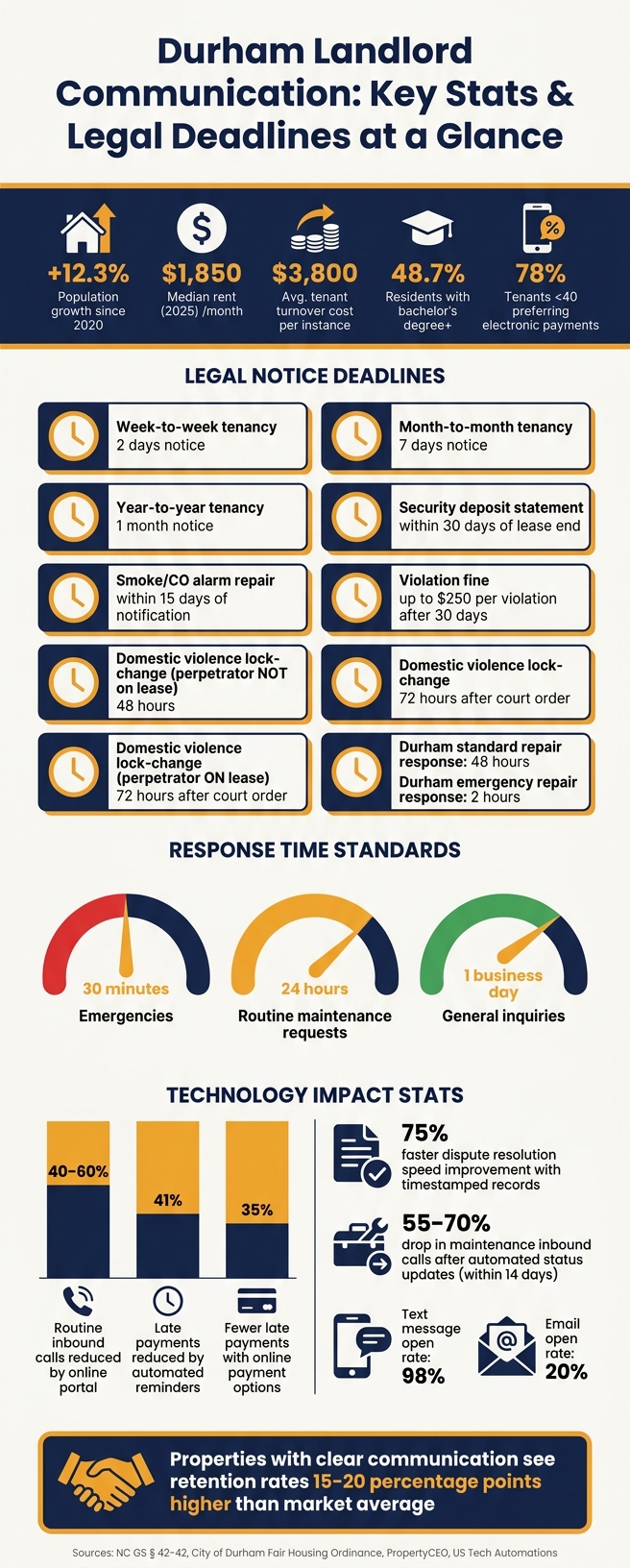
Durham Landlord Communication: Key Stats & Legal Deadlines at a Glance
The Right Way to Handle Tenant Communication
sbb-itb-aa27f6d
Legal and Regulatory Communication Requirements
Durham landlords are required to adhere to a mix of state, local, and federal communication rules. Each level of governance outlines specific duties regarding how, when, and what landlords must communicate with tenants.
North Carolina Landlord-Tenant Laws
North Carolina law sets clear guidelines for landlord communication, particularly around notice periods for lease terminations. These timelines depend on the type of tenancy:
| Tenancy Type | Required Notice Period |
|---|---|
| Week-to-week | 2 days |
| Month-to-month | 7 days |
| Year-to-year | 1 month |
Additionally, landlords must provide an itemized security deposit statement within 30 days of the lease’s conclusion if retaining any portion of the deposit. When it comes to safety equipment, landlords have 15 days to repair or replace broken smoke or carbon monoxide alarms after being notified by a tenant. Failing to address these issues within 30 days can result in fines of up to $250 per violation.
It’s also crucial to avoid illegal eviction practices. North Carolina law prohibits lockouts and utility shutoffs as means of eviction. Instead, landlords must follow the Summary Ejectment process, which requires filing through District Court. Hearings are typically scheduled within 7 to 30 days. Any informal or improper communication about eviction could expose landlords to legal consequences.
Durham-Specific Considerations
Durham enforces additional communication rules that go beyond state requirements. The City of Durham Fair Housing Ordinance expands the list of protected classes to include military status, protected hairstyles, sexual orientation, and sexual identity. The City’s Human Relations Division emphasizes:
"The Human Relations Division enforces the federal Fair Housing Act and the Fair Housing Ordinance of the City of Durham. These laws prohibit housing discrimination on the basis of race, color, national origin, religion, sex (gender), handicap (disability), familial status, military status, protected hairstyles, sexual orientation, and sexual identity." – City of Durham Human Relations Division
This means your rental advertisements, lease terms, and daily tenant interactions must reflect these expanded protections. For tenants experiencing domestic violence, landlords must respond to lock-change requests within 48 hours if the perpetrator is not on the lease. If the perpetrator is listed on the lease, landlords have 72 hours to act after receiving a court order. These rules are designed to complement broader federal standards.
Federal Communication Requirements
Federal laws, including the Fair Housing Act and the Americans with Disabilities Act (ADA), set the tone for landlord-tenant communication nationwide. The key takeaway? Apply consistent standards to everyone and document all decisions.
For disability-related requests, such as reasonable accommodations or physical modifications, landlords must handle each request formally and maintain proper documentation. Importantly, assistance animals are not classified as pets under fair housing laws. This means landlords cannot impose pet fees or enforce "no-pet" policies for these animals.
To stay compliant, keep all written communication professional, factual, and focused on the property. As one property management expert explains:
"Communication is part of compliance. Keep written messages professional, stick to facts, and avoid side commentary about neighborhoods or what a property is ‘best for.’" – Keyrenter Triad
A practical way to safeguard against fair housing complaints is to create a written screening criteria document and provide it to every applicant. Use this document to explain why applications are approved or denied, sticking strictly to the published criteria. This approach can protect landlords if a fair housing complaint is filed with Durham’s Human Relations Division, which actively enforces both federal and local regulations.
Best Practices for Communicating with Tenants
Turning legal compliance into practical, everyday strategies can make a big difference in landlord-tenant relationships.
Clarity and Consistency in Communication
Clear, timely, and consistent communication is essential. Avoid vague statements like "as soon as possible." Instead, provide specific details: a set date, a time frame, and the name of the person handling the issue. This level of detail reduces confusion and follow-up questions.
Establishing response time standards is equally important. For example:
- 30 minutes for emergencies
- 24 hours for routine maintenance requests
- 1 business day for general inquiries
When tenants know what to expect, they’re less likely to send repeated follow-ups.
Choosing the right communication channel is also key. Email is best for formal notices and lease-related discussions since it creates a documented record. Text messages are ideal for urgent updates or reminders, as they boast a 98% open rate, compared to just 20% for email. Phone calls should be reserved for emergencies or sensitive matters requiring personal attention.
"Great tenant communication doesn’t mean being available 24/7 or saying yes to everything. It means being clear, timely, professional, and systematic." – PropertyCEO
These strategies ensure a smooth start to tenant interactions, particularly during the move-in process.
Setting Expectations at Move-In
The first month of a tenancy is critical for establishing a positive relationship. A structured communication plan during this time can prevent small issues from escalating. Here’s a suggested timeline:
- Day 0: Send a welcome email with important details like portal login credentials, emergency contacts, and a utility setup checklist.
- Day 3: Check in with a quick text to see if everything is going well.
- Day 14: Share helpful information, such as trash collection schedules, parking rules, and local resources.
- Day 30: Send a satisfaction survey to uncover any lingering concerns.
This proactive approach shows professionalism and builds trust from the outset. In Durham, where 48.7% of residents hold a bachelor’s degree or higher, tenants often expect organized, tech-forward communication from the start.
Two-Way Communication and Feedback
Effective communication isn’t just about delivering messages – it’s also about listening. How landlords handle tenant concerns can significantly impact trust.
"Tenants may forgive a delayed repair more easily than they forgive being ignored, because silence creates uncertainty and distrust." – Jordan Ellis, Senior Real Estate Content Strategist, MyListing365
Using the HEARD framework – Hear, Empathize, Apologize, Resolve, and Document – can help maintain professionalism when addressing feedback. This method ensures tenants feel heard and creates a clear record in case issues escalate.
After resolving a problem, follow up with a message to confirm the issue is fully addressed and ask if the tenant is satisfied. Consistently closing the loop not only resolves problems but also strengthens tenant relationships. Properties in Durham that emphasize clear communication see retention rates 15–20 percentage points higher than the market average.
Communication at Each Stage of the Tenancy
When managing a rental property, communication needs to adapt to the specific stage of the tenancy. What works during tenant screening may not be as effective during move-out, so tailoring your approach is key to maintaining smooth interactions and trust throughout the tenant lifecycle.
Pre-Leasing and Tenant Screening
Start on the right foot by being upfront about your screening criteria. Outline your requirements – such as income, credit score, and rental history – in clear, written terms. Consistently applying these criteria not only ensures fairness but also provides legal protection. This transparency builds trust with prospective tenants.
Make sure your listings and screening processes comply with Durham’s expanded Fair Housing protections. These protections go beyond federal standards, covering military status, protected hairstyles, sexual orientation, and sexual identity. To avoid any misunderstandings, use standardized email templates for application updates, ensuring every applicant gets the same information. For questions or concerns about housing discrimination, provide clear contact information, such as the City of Durham’s Human Relations Division at 919-560-4570 or [email protected].
This clear and consistent communication sets the stage for a smooth move-in process.
Move-In and Onboarding
Provide tenants with all essential move-in details in writing, while using quicker methods like text messaging for last-minute coordination. Email is ideal for sharing formal documents, such as the signed lease, utility setup instructions, and property policies, so tenants can easily refer back to them. For real-time updates – like confirming arrival times or handling key exchanges – texting can be a lifesaver. If any disputes arise during the initial walkthrough, follow up with a same-day email summarizing the issues discussed.
For landlords juggling multiple properties in Durham, maintaining this level of responsiveness can be tough. Property management services like Unicorn Rentals can help by offering 24/7 maintenance coordination, ensuring tenants get timely support during their move-in.
Lease Renewals and Move-Outs
When it comes to lease renewals, reach out early. Clearly communicate any proposed rent adjustments in writing, and use tools like DocuSign to streamline the process. For move-outs, send tenants a detailed checklist covering cleaning expectations, key return procedures, and deposit timelines. This helps avoid confusion and reduces the likelihood of disputes. Keep in mind that North Carolina law grants specific early termination rights to military personnel and victims of domestic violence, allowing them to end their lease with 30 days’ written notice.
Tools and Processes for Better Tenant Communication
Communication Channels and Templates
Each communication channel has its strengths. Email is ideal for formal notices, lease renewals, and keeping records. For urgent or time-sensitive updates, text messaging is highly effective. Phone calls work best for sensitive or complex discussions, but make sure to follow up with a written summary to maintain proper documentation.
Using standardized templates can save time and ensure consistency. These templates are especially useful for tasks like rent reminders, maintenance acknowledgments, lease renewal offers, and entry notices. For landlords in Durham, templates should also comply with submission guidelines outlined in NC GS § 42-42.
Incorporating automation into these processes can further improve efficiency, reducing manual effort and ensuring timely communication.
Property Management Technology
Property management technology takes communication to the next level by centralizing and automating key processes. A centralized online portal allows tenants to handle tasks like submitting maintenance requests, paying rent, and accessing lease documents – all without needing direct contact. This can cut routine inbound calls by 40% to 60%.
Automated rent reminders, sent five days before the due date, have been shown to reduce late payments by 41% compared to manual follow-ups. Properties in Durham that offer online payment options report 35% fewer late payments, with around 78% of tenants under age 40 favoring electronic payment and communication methods. Platforms like Unicorn Rentals integrate these features, providing tenants with access to vetted maintenance providers through an online portal. This system also keeps timestamped records, which align with Durham’s repair standards – 48 hours for standard repairs and 2 hours for emergencies.
"Maintenance-related inbound calls drop 55–70% within 14 days of implementing automated status updates – this is the fastest-acting ROI of any communication automation." – Garrett Mullins, Workflow Specialist, US Tech Automations
Written Policies and Documentation
Clear written policies are essential for reinforcing communication systems and technology. Defined response time standards, such as 30 minutes for emergencies and 24 hours for routine maintenance requests, set clear expectations for tenants. A "Portal First" policy encourages tenants to submit maintenance requests and payments through the online system, reserving phone calls for urgent or complex situations.
Additionally, ensure that any verbal agreements are documented in writing. Timestamped records from digital systems can resolve disputes 75% faster and provide critical legal protection. For Durham landlords managing multiple units, this structured approach can help transform operations from reactive to proactive.
Key Takeaways for Durham Landlords
For landlords in Durham, staying on top of tenant communication and property management isn’t just good practice – it’s a legal requirement. Laws in the area tie repair timelines, fee enforcement, and even lock-change responses to proper written notices.
Keeping written records – whether it’s lease agreements or maintenance requests – plays a dual role. It not only streamlines dispute resolution but also ensures compliance with NC GS § 42-42 and supports the communication standards outlined in Durham’s Fair Housing Ordinance.
Digital tools can make a big difference in payment management. Properties offering online payment options report 35% fewer late payments, and 78% of Durham tenants under 40 prefer electronic payments. These stats highlight how adopting modern tools can improve efficiency and tenant satisfaction.
For landlords managing multiple units, having a streamlined system is essential. Multi-unit management requires compliance, quick responses, and detailed documentation. Services like Unicorn Rentals offer flexible property management plans, including:
- Standard Full-Service Management (10% of monthly rent): Covers basic management needs.
- Premium Management (15% of monthly rent): Includes preventive maintenance inspections, free lease renewals, and no repair markups.
Their online portal simplifies maintenance requests and rent collection, ensuring landlords meet Durham’s response time requirements: 2 hours for emergencies and 48 hours for standard repairs.
FAQs
What should I put in writing vs. handle by text or phone?
Formal communication, such as rent reminders, lease renewals, notices, or legal issues, should always be documented in writing – whether through email or written notices. This approach ensures compliance and creates a clear record for reference.
For quick updates, like scheduling maintenance or sending emergency alerts, text messages are a practical choice due to their immediacy.
When dealing with complex or sensitive matters, such as disputes or negotiations, it’s best to address them over the phone to foster understanding. However, always follow up with a written summary to ensure clarity and maintain proper documentation.
How can I document tenant requests to prevent legal issues?
Maintaining a written record of tenant requests is crucial for avoiding legal complications. Tenants should always communicate their concerns in writing – whether through email, text messages, or property management platforms – and include specific details about the issue. As a landlord, make sure to document the date, the nature of the request, and your response. By keeping copies of all correspondence, you create a clear paper trail that shows consistent communication and adherence to legal obligations, which can be invaluable if disputes arise.
What fair-housing mistakes can landlords make in everyday messages?
Landlords can sometimes breach fair-housing laws without realizing it, especially when tenant requests are handled inconsistently or with delays. Even if unintentional, such actions might come across as discriminatory. Another common pitfall is neglecting to keep thorough records of communications, which can make landlords more vulnerable to fair-housing complaints. To steer clear of these problems, it’s crucial to respond to tenants promptly, maintain consistency in all interactions, and document every communication carefully.