
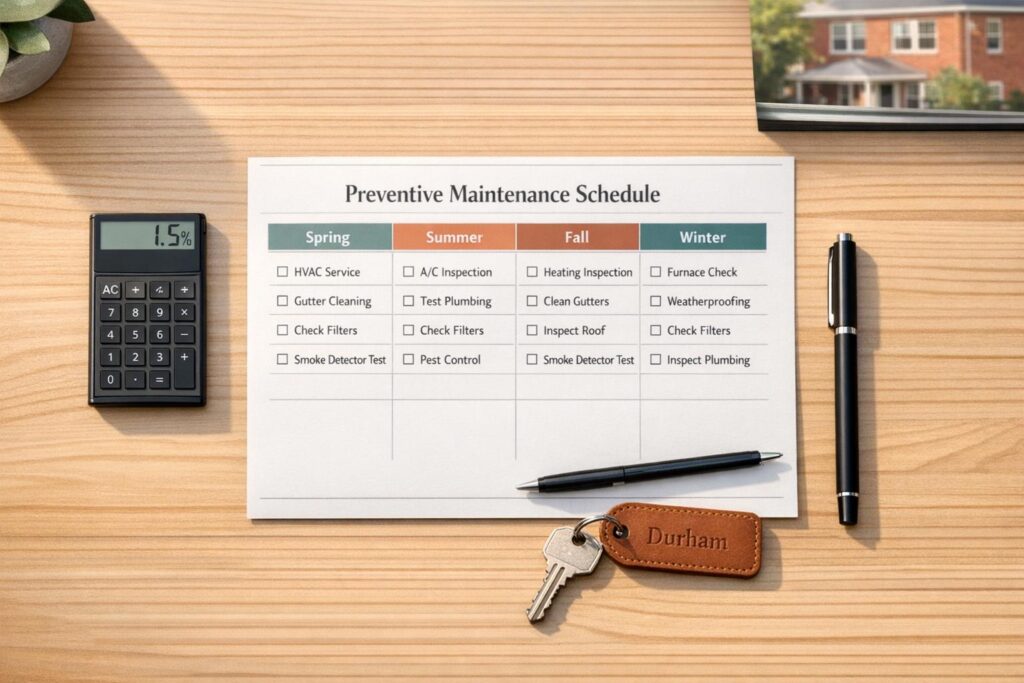
Preventive maintenance is the key to keeping your Durham rental property in top shape, avoiding costly emergencies, and maintaining tenant satisfaction. Here’s a quick rundown:
- Why It Matters: Durham’s humid climate can cause moisture issues, and local housing code violations can result in fines of $100–$500. Preventive care reduces emergency repairs by up to 40% and extends equipment life by 4.3 years.
- Steps to Follow:
- Inspect Your Property: Check HVAC, plumbing, roofing, and moisture-prone areas. Document everything with photos and logs.
- Create a Schedule: Plan tasks monthly, quarterly, semi-annually, and annually, aligning with Durham’s seasons.
- Budget Wisely: Allocate 1.2%–1.8% of property value annually for upkeep and maintain an emergency fund.
- Communicate with Tenants: Notify them of maintenance in advance and encourage reporting of small issues early.
- Consider Property Management Services: Use professional services to handle scheduling and repairs efficiently.
Preventive care not only saves money but also reduces tenant turnover, which can cost landlords an average of $3,800 per vacancy. Staying proactive helps ensure compliance, lowers expenses, and keeps tenants happy.
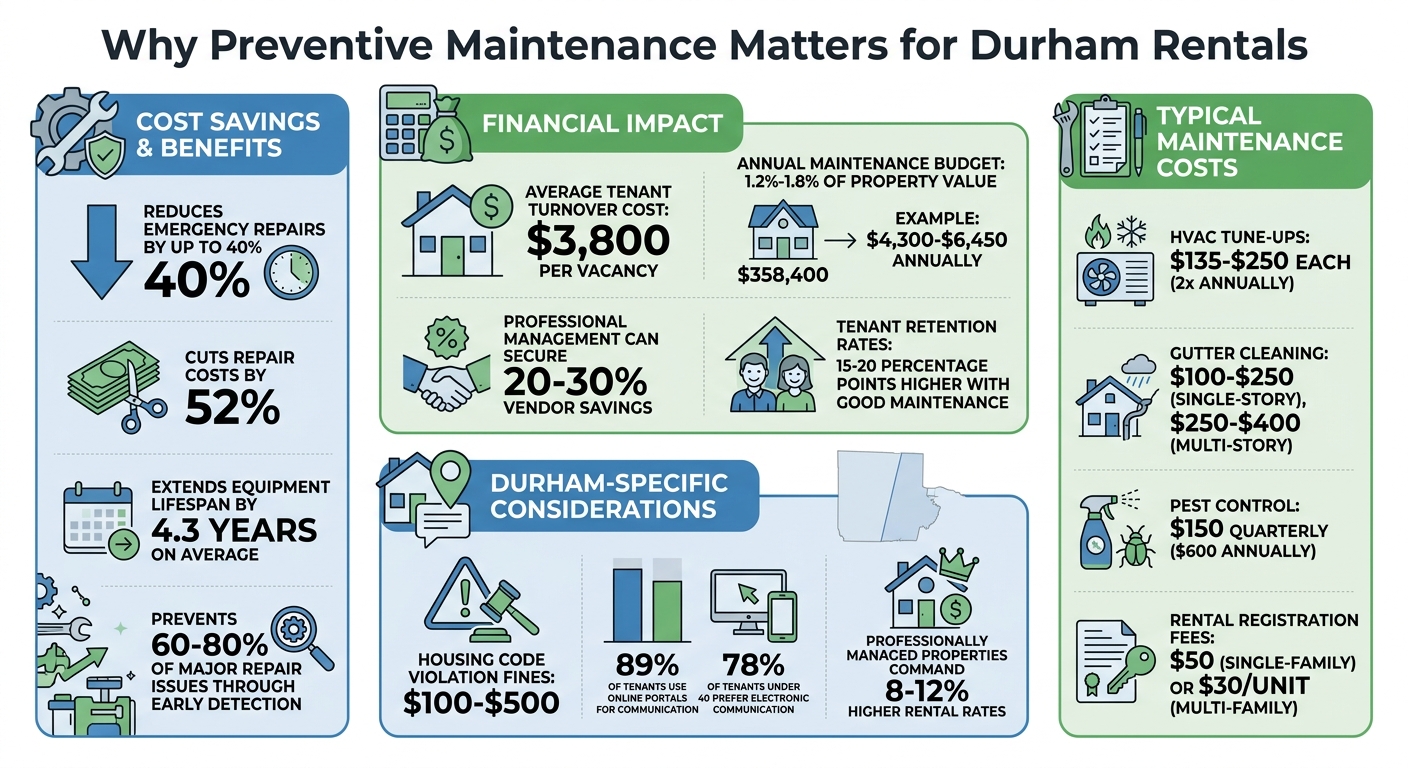
Preventive Maintenance Benefits and Cost Savings for Durham Rental Properties
The Essential Property Maintenance Checklists You’ll Need All Year
sbb-itb-aa27f6d
Step 1: Assess Your Property
Before diving into maintenance tasks, take the time to thoroughly inspect both the interior and exterior of your property. A quick glance won’t cut it – this step ensures you identify issues that might otherwise go unnoticed.
Inspect Key Systems and Areas
Start with the systems that are essential for a safe and functional property: HVAC, plumbing, electrical, roofing, and structural elements. In Durham’s humid subtropical climate, moisture-prone areas like bathrooms, kitchens, basements, and crawl spaces deserve extra attention. Look for signs of mold or mildew, check under sinks for water damage, test GFCI outlets, and confirm that smoke and carbon monoxide detectors are in working order.
Don’t overlook the exterior. Inspect gutters and downspouts, especially during Durham’s heavy spring pollen season, to ensure they’re clear of debris. Examine siding for any signs of mold or mildew, and check the foundation grading to confirm that water is being directed away from the building during heavy rains. Schedule HVAC inspections twice a year – once before winter for heating and again before summer for cooling. Lastly, inspect the caulking around windows and doors to make sure it’s intact and sealing properly. These observations will help guide your future maintenance priorities.
Document Current Conditions
After completing your inspection, document everything thoroughly. Use timestamped photos and a checklist to record the condition of key areas and systems. This creates a visual record that’s invaluable for monitoring wear and tear, deciding whether to repair or replace items, and safeguarding security deposits. Be sure to note the age and condition of major components like the roof, water heater, and HVAC system to anticipate when they might need replacement.
Maintain a detailed log of all repairs, including the date, vendor, cost, and specifics of the work performed. If technicians flag issues like a "capacitor showing wear" or a "system nearing the end of its lifespan", make a note of it so you can budget for upcoming expenses. Keeping these records isn’t just practical – it’s also essential if the cities we serve like Durham require proof of compliance from the City-County Inspections Department.
Step 2: Create Your Maintenance Schedule
After assessing your property, the next step is to create a maintenance schedule that ensures everything stays in excellent condition while keeping tenants happy. By organizing tasks based on how often they need to be done and factoring in Durham’s seasonal weather, you can stay ahead of potential issues.
Organize Tasks by Frequency
Divide your maintenance tasks into four main categories: monthly, quarterly, semi-annual, and annual. This approach helps you keep track of essential duties and prevents anything from slipping through the cracks.
- Monthly tasks: Focus on quick checks like inspecting the exterior, testing entryway lighting, and ensuring smoke and carbon monoxide detectors are in place.
- Quarterly tasks: Replace HVAC filters (especially important during Durham’s pollen-heavy seasons), test GFCI outlets, check locks on windows and doors, and look under sinks for any signs of leaks or moisture.
- Semi-annual tasks: Perform these in spring and fall. Schedule HVAC tune-ups ahead of the cooling and heating seasons, inspect roof shingles for damage, and refresh caulking or weatherstripping around windows and doors.
- Annual tasks: These are your deep-dive inspections. Conduct a detailed 50+ point walkthrough of both the interior and exterior, inspect water heaters, and evaluate the condition of major systems like roofs and appliances.
To keep everything on track, follow the "10% Rule": aim to complete all preventive maintenance tasks within 10% of their scheduled due date. For example, finish monthly tasks within about three days of their target date and quarterly tasks within nine days. Once you’ve sorted tasks by frequency, fine-tune your schedule to account for Durham’s specific seasonal conditions.
Account for Durham‘s Weather Patterns
Durham’s weather plays a big role in property maintenance, so it’s crucial to align your schedule with the area’s seasonal demands. Summers are hot and humid, putting extra stress on air conditioning systems, while winters bring wet conditions that can lead to leaks and structural rot if not addressed promptly.
- Spring: Schedule your cooling system tune-up before the heat sets in and replace air filters to combat heavy pollen.
- Summer: Check siding for mildew and inspect crawl spaces or basements for moisture caused by high humidity.
- Fall: This is the time to prepare for winter. Clean gutters after the leaves have fallen, inspect your heating system in October, and seal cracks in driveways or foundations before freezing temperatures arrive.
- Winter: Insulate exposed pipes, disconnect garden hoses, and keep an eye on windows for condensation, which could indicate excessive indoor humidity. Given Durham’s dense tree coverage, cleaning gutters quarterly is essential to prevent water from pooling around the foundation.
Step 3: Budget for Maintenance Costs
In Durham’s rental market, keeping up with maintenance is crucial for tenant satisfaction and retention. That means planning carefully for both routine upkeep and unexpected repairs. On average, annual maintenance costs range from 1.2% to 1.8% of a property’s value. For example, if your property is valued at $358,400, you can expect to spend somewhere between $4,300 and $6,450 annually on maintenance.
Estimate Routine Task Costs
Start by calculating the costs of regular maintenance tasks. Here are a few examples:
- HVAC maintenance: Scheduling two annual tune-ups typically costs $135–$250 each.
- Gutter cleaning: For single-story homes, this service costs $100–$250 per visit, while multi-story properties range from $250 to $400. Given Durham’s heavy leaf drop and pollen, plan for this twice a year.
- Pest control: Quarterly treatments at $150 each will total around $600 annually.
You’ll also need to account for local fees. For instance, Durham charges rental registration fees of $50 for single-family homes or $30 per unit for multi-family properties. If your property is older than 20 years, consider allocating up to 4% of its value for repairs to aging elements like roofs, water heaters, and appliances.
Investing in preventive maintenance can pay off in the long run by reducing emergency repair costs by up to 32%. For example, avoiding major issues like burst pipes ($250–$1,000) or HVAC breakdowns ($500–$3,000) can save you significant stress and expense.
Once you’ve accounted for routine maintenance, it’s time to prepare for the unexpected.
Build an Emergency Reserve Fund
No matter how well you plan, unexpected repairs are inevitable. Set aside at least $500 annually for minor emergencies and maintain a reserve fund equal to three to six months of operating expenses. This can help cover larger expenses, such as roof replacements.
It’s also smart to keep track of the age of major systems in your property. For example, HVAC units typically last 15–25 years. If yours is approaching 20 years, start saving for a replacement now. Partnering with a professional property management service can also help stretch your budget further. These services often secure 20%–30% savings by leveraging established vendor networks.
Finally, remember that while routine maintenance costs are tax-deductible, capital improvements need to be depreciated over time. Proper planning and budgeting will keep your property in great shape while protecting your bottom line.
Step 4: Keep Tenants Informed
Keeping tenants in the loop is key to ensuring smooth property maintenance and addressing potential problems early. In Durham, a whopping 89% of tenants use online portals for property-related communication. This highlights the importance of leveraging digital tools to simplify communication.
Give Advance Notice of Scheduled Work
Always provide tenants with at least 48 hours’ notice before any scheduled maintenance or inspections. This allows them to prepare or request a reschedule if necessary.
"DHA will notify you at least two days in advance. You must provide access for inspectors. Failure to do so is a lease violation."
– Durham Housing Authority
Digital portals can make this process seamless by automating notifications for recurring tasks. Considering that 78% of tenants under 40 prefer electronic communication, sending notices via email, text, or online platforms is far more effective than traditional paper notices. Properties that prioritize clear and responsive communication often achieve tenant retention rates 15–20 percentage points higher than the market average.
In addition to timely updates, ensure contractors respect tenant privacy, arrive on time, and leave the work area clean. These small but meaningful steps can significantly boost tenant satisfaction and encourage lease renewals.
Once notifications are sent, be proactive in seeking tenant feedback to improve your maintenance process.
Ask Tenants About Maintenance Issues
Beyond sending notifications, it’s crucial to actively engage tenants about potential maintenance concerns. Tenants often spot minor issues – like a small leak or a noisy HVAC system – before they escalate into costly repairs. Instead of vague questions like "Is everything okay?", try asking more specific ones such as, "Have you noticed any leaks, unusual noises, or slow drains?"
Setting up a 24/7 online portal where tenants can report issues in real time is another effective strategy. Encourage them to include photos with their reports, as this can help speed up the resolution process. Additionally, outline minor upkeep responsibilities in the lease – like replacing air filters or notifying management about clogged gutters – to involve tenants in property care.
"Preventive maintenance is how you get ahead of problems, reduce emergencies, protect owners’ assets, and give tenants a better living experience."
– United Field Services
Responding quickly to tenant-reported issues is essential. In professionally managed Durham properties, emergency maintenance requests are typically addressed within 2 hours, while routine repairs are handled within 48 hours. Prompt action not only resolves problems faster but also encourages tenants to report issues early, preventing them from snowballing into bigger headaches.
Step 5: Work with Property Management Services
Handling preventive maintenance on your own can quickly become overwhelming, especially if you’re managing multiple properties or living out of state. This is where property management services step in, taking care of scheduling, coordination, and execution. By outsourcing these tasks, you save time, reduce stress, and ensure that no maintenance need slips through the cracks. It’s an efficient way to complement the preventive measures you’ve already put in place.
Benefits of Working with Unicorn Rentals
Unicorn Rentals simplifies property management with 24/7 maintenance coordination supported by a network of 37 licensed and insured contractors. They ensure quick responses for emergencies and timely completion of routine repairs. With this centralized system, you can avoid late-night tenant calls and the hassle of finding reliable contractors on short notice.
In Durham’s competitive rental market, professional property management can increase tenant satisfaction and even justify higher rental rates. Unicorn Rentals’ Tier 3 Premium plan stands out with quarterly inspections covering HVAC systems, plumbing, safety detectors, water heaters, and exterior drainage. These inspections help prevent 60%–80% of major repair issues by identifying problems early. Within 48 hours of each inspection, you’ll receive a detailed, photo-supported report, giving you a clear snapshot of your property’s condition.
"These proactive inspections typically prevent 60-80% of major repair issues by catching problems early, saving thousands in emergency repairs while keeping your Raleigh rental property in excellent condition."
– Unicorn Rentals
Another perk? Unicorn Rentals negotiates contractor rates that are, on average, 25% below retail pricing. Plus, their Tier 2 and Tier 3 plans eliminate repair markups, saving landlords $500–$2,000 annually. A proactive approach to maintenance can also cut emergency repair costs by 52% and extend the lifespan of major equipment by an average of 4.3 years.
Choose a Service Plan That Fits Your Needs
Unicorn Rentals offers flexible plans tailored to different budgets and management preferences:
- Standard Plan: Costs 10% of monthly rent (or 7% for portfolios of 5+ units) and includes full-service management with 24/7 maintenance coordination. However, repairs come with a 15% markup.
- Value+ Plan: Priced at 13% of monthly rent (or 10% for portfolios), this plan eliminates repair markups and adds owner protection for malicious damage up to $35,000, eviction assistance, and liability coverage.
- Premium Plan: At 15% of monthly rent (or 12% for portfolios), this plan includes everything in the Value+ plan, plus free quarterly preventive inspections, free lease renewals, and discounted tenant placement fees.
For landlords who prioritize thorough oversight, the Premium plan is an excellent choice. Quarterly inspections can help you avoid expensive emergencies, while zero-markup repair pricing ensures you’re not overpaying for fixes. Additionally, professionally managed properties in Durham often command 8–12% higher rental rates, which can offset the cost of management fees and protect your investment over the long haul.
Conclusion
Scheduling preventive maintenance for your Durham rental is more than just a good idea – it’s an essential way to protect your investment and create a welcoming environment for tenants. By regularly assessing your property’s condition, setting a clear maintenance schedule, budgeting for routine tasks, keeping tenants informed, and working with professionals when needed, you’re positioning your property for long-term success in Durham’s competitive rental market.
The benefits of proactive maintenance are hard to ignore. It can cut emergency repairs by up to 40%, reduce repair costs by 52%, and extend the lifespan of major equipment by an average of 4.3 years. Plus, it helps you avoid the $3,800 average cost of tenant turnover in Durham. Well-maintained properties also see tenant retention rates that are 15–20 percentage points higher – a win-win for both landlords and tenants.
Durham’s humid subtropical climate makes regular inspections even more critical. By addressing potential moisture damage and mold early, you can avoid costly repairs and fines ranging from $100 to $500 for not meeting local housing code standards. These inspections are a cornerstone of maintaining a safe and compliant property.
If you’re just starting out, review maintenance calls from the past 6–12 months to identify recurring problems. Use this information to create a tailored maintenance plan, allocating 1.2%–1.8% of your property’s value annually for upkeep. Detailed records, including timestamped photos and checklists, will help you stay organized and prepared. Whether you handle maintenance yourself or partner with a service like Unicorn Rentals, consistency is the secret to success – preventing problems always beats reacting to them.
Your Durham rental is a valuable asset, and proactive care ensures it stays that way. By implementing these steps, you’ll save money, reduce stress, and create a rental experience that keeps tenants happy and eager to stay year after year.
FAQs
What’s the easiest way to turn past repair calls into a preventive maintenance plan?
Proactively managing maintenance is simpler than it seems. Start by reviewing past repair records to spot recurring problems. From there, you can create a maintenance checklist targeting common issues like HVAC failures or plumbing leaks. Include regular tasks such as seasonal HVAC tune-ups and gutter cleaning. This approach not only helps prevent emergencies but also cuts costs and keeps systems running longer by tackling issues early.
How do I decide whether to repair or replace aging systems like HVAC or a water heater?
Deciding whether to fix or swap out aging systems comes down to their condition, how much life they have left, and what makes the most financial sense. Opt for repairs if the system is relatively new, has only minor problems, and fixing it costs significantly less than replacing it. On the other hand, consider replacing if the system is old, breaks down often, or repair expenses are nearing the cost of a new unit. Keeping up with regular maintenance and watching for signs like higher energy bills or uneven performance can make your choice clearer.
What maintenance tasks should tenants handle vs. report to the landlord?
Tenants usually handle routine maintenance tasks, such as changing air filters, replacing smoke detector batteries, and keeping the property tidy. However, for more serious issues – like plumbing leaks, HVAC malfunctions, electrical problems, or structural damage – they should notify the landlord or property management right away to ensure timely repairs and prevent further complications.