
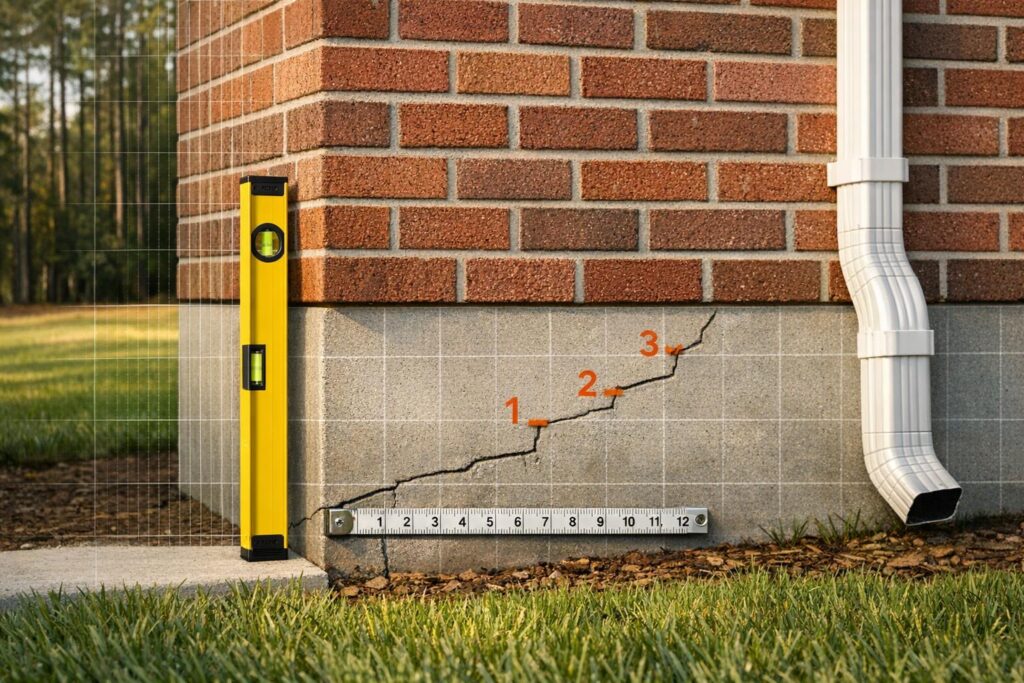
Foundation inspections are essential for rental property owners in the Triangle area. They help identify structural issues early, ensuring tenant safety, preserving property value, and reducing expensive repairs. With Raleigh’s rapid growth and clay-heavy soil, regular checks are more important than ever.
Key Takeaways:
- Why Inspect? Catch problems like cracks, sloping floors, or drainage issues early to save thousands in repairs (average repair cost: $5,165).
- Inspection Costs: $300–$1,200 depending on property size and foundation type.
- When to Inspect: Quarterly visual checks, semi-annual professional inspections, and after heavy rains or droughts.
- Benefits: Extend property lifespan, improve tenant satisfaction, and maintain compliance with housing codes.
A well-maintained foundation ensures your rental stays competitive in a fast-growing market like the Triangle. Regular inspections are a smart, cost-effective way to protect your investment.
Foundation Inspections 101: What Pros Look For & Why It Matters
sbb-itb-aa27f6d
Warning Signs of Foundation Problems
Spotting foundation issues early can save you a fortune in repairs. In 2025, the average foundation repair costs $5,165, with a typical range between $2,218 and $8,111. Knowing the warning signs during inspections can help you avoid expensive structural damage.
Ryan Fitzgerald, Realtor and Owner of Raleigh Realty, emphasizes the importance of being proactive:
Severe structural issues are rare but worth checking for since they can be financially devastating.
In the Triangle area, soil conditions make foundation monitoring even more critical. The region’s Triassic soils tend to expand and contract with moisture changes – sometimes by as much as 10% to 15% – which puts constant stress on foundations. Depending on weather and drainage, these signs may appear gradually or suddenly. Below are some key indicators to watch for.
Cracks in Walls, Floors, or Ceilings
Cracks are one of the clearest signs of foundation movement. Horizontal cracks in foundation walls are particularly alarming, as they suggest severe structural stress that needs immediate attention. Keep an eye out for gaps around wall, ceiling, or door frame joints, which can indicate that the structure is pulling apart.
Don’t stop at the main living spaces. Crawlspaces and attics often reveal early warning signs of foundation trouble. Water stains on walls or a musty smell in these areas can point to drainage issues that may destabilize the foundation over time. Ensure gutters and downspouts are working correctly and that the ground slopes away from the foundation to prevent water from pooling.
Doors and Windows That Stick or Won’t Close Properly
Foundation shifts can misalign door and window frames, making them difficult to open or close. Andy Takla, Engineer at Takla Engineering, explains:
Sticking doors are usually a result of floor frame deflection. Most of the time, it’s due to the geometry of the way the floor was laid out… but sometimes it’s due to an inadequate floor system to begin with.
Test all windows and exterior doors during move-in and move-out inspections. If they stick or require excessive force, it could signal foundation movement. Look for gaps between frames and walls, which often indicate structural separation. Also, check if interior walls are pulling away from cabinets or countertops – this often accompanies door and window misalignment.
While minor sticking from seasonal humidity is normal, persistent or worsening problems are a red flag. Take photos every three months to track changes over time, as seasonal patterns can offer clues. Tenants, who interact with doors and windows daily, are often the first to notice these issues – encourage them to report any new problems promptly.
Uneven or Sloping Floors
Sloping or uneven floors can be a sign of foundation settling. These irregularities may stem from warped joists, insufficient support, or soil expansion.
As you walk through the property, pay close attention to how the floors feel underfoot. If you notice significant sloping, consult a structural engineer to assess the issue and provide an engineer’s seal – this is crucial for safety and future resale value. Additionally, listen for the sound of running water when no fixtures are in use; this could indicate a slab leak saturating the soil and causing foundation shifts.
The Foundation Inspection Process
When potential foundation issues are suspected, a thorough inspection is essential to confirm and assess the extent of the problem. Professional foundation inspections follow a structured approach, combining visual checks with precise measurements to uncover underlying structural concerns.
Initial Visual Assessment
Inspectors begin by verifying visible warning signs identified during routine checks, using tools to measure and confirm their observations. This involves a detailed walkthrough of both the interior and exterior areas of the property, including crawlspaces and basements. They look for major indicators like cracks, sagging floors, and misaligned doors or windows.
For the exterior, drainage and grading are key focus areas. Inspectors check for issues like pooling water near the foundation, blocked or overflowing gutters, and displaced soil around landscaping. They also pay attention to odors that could signal moisture problems. According to the International Residential Code, the ground should slope away from the foundation by at least 6 inches within the first 10 feet to ensure proper drainage.
Specialized Tools and Technology
Once the visual assessment is complete, inspectors rely on advanced tools to gather detailed data. Manometers and digital levels are used to measure floor elevation changes across the slab, revealing subtle settling patterns that might not be obvious during a walkthrough.
For cracks, inspectors use crack width gauges graduated in 1/32-inch increments to get precise measurements rather than relying on estimates. This level of accuracy is crucial since hairline cracks under 1/16 inch are often harmless, but cracks wider than 1/4 inch require immediate professional attention. Moisture meters help detect hidden water damage behind walls or finished surfaces, while digital inclinometers measure wall angles to check for bowing or leaning foundation walls.
Inspection Report and Recommendations
The inspection concludes with a detailed report that outlines all findings. This report includes specific deficiencies, their locations, severity levels, and recommendations for further action if necessary. To ensure clarity, inspectors include systematic photographs with scale references, such as a ruler placed beside a crack, along with plot plan sketches that show problem areas in relation to the building’s footprint.
Findings are categorized into three levels: Monitor (stable conditions to be rechecked in 12 months), Repair (active issues or those exceeding cosmetic thresholds), and Emergency (immediate safety risks). The report also highlights any areas that couldn’t be inspected, such as spaces behind finished walls or under floor coverings. If significant issues are identified, hiring a licensed structural engineer for a formal evaluation is often necessary, with costs typically ranging from $300 to $800.
This comprehensive process ensures informed decisions about maintenance and repairs, protecting your property and ensuring safety for everyone involved.
Foundation Inspection Costs in the Triangle Area
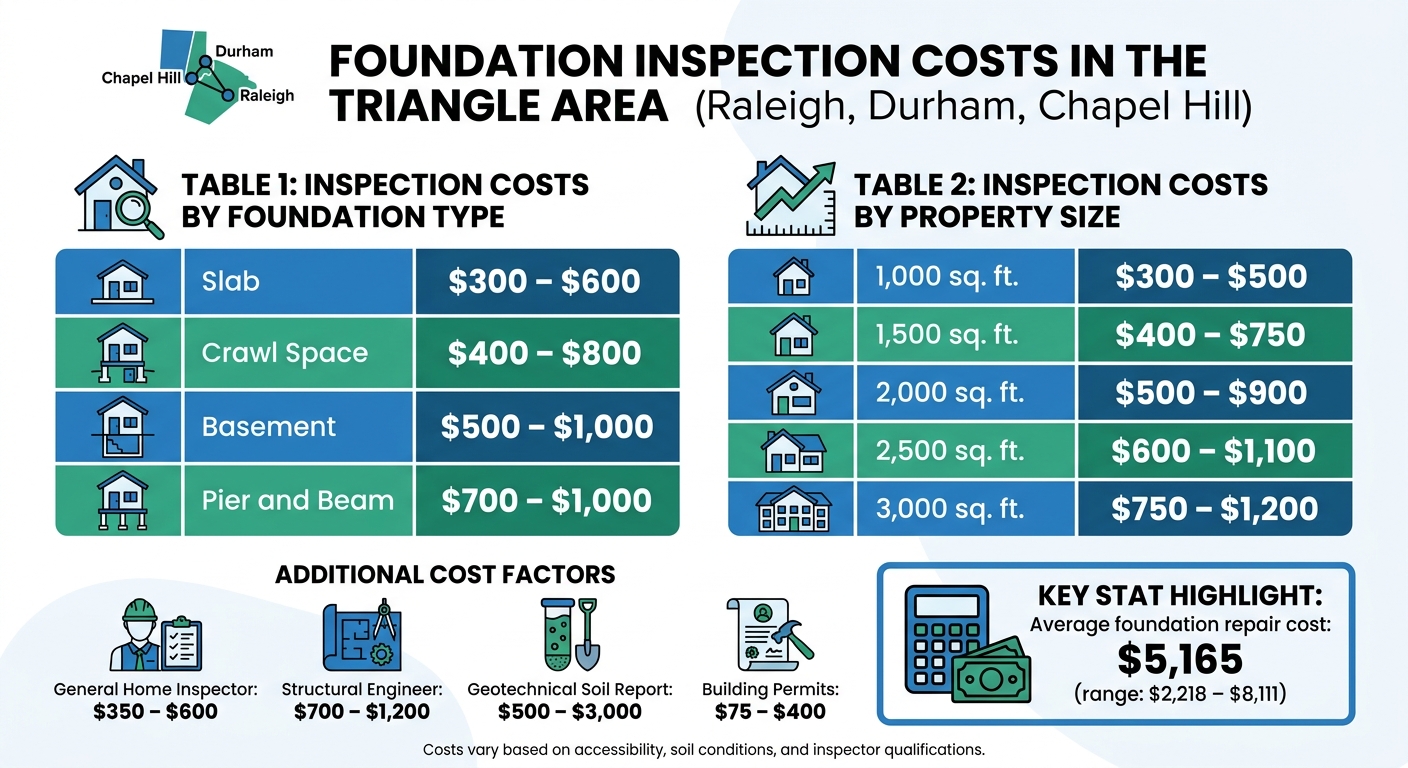
Foundation Inspection Costs by Property Size and Foundation Type in Triangle Area
Foundation inspections in the Triangle area typically range from $300 to $1,200. Having an accurate estimate helps property owners plan for both preventive maintenance and any necessary repairs. In cities like Raleigh, Durham, and Chapel Hill, inspection costs generally fall within this range.
What Affects Inspection Costs
Several factors influence the cost of foundation inspections:
- Property Size: The larger the property, the higher the inspection cost. For instance, inspecting a 1,000-square-foot home might cost between $300 and $500, while a 3,000-square-foot property could cost $750 to $1,200.
- Foundation Type: Different foundation types require varying levels of effort:
- Slab foundations are quicker to inspect since they only require checks of exterior perimeters and interior floors.
- Crawl spaces, basements, and pier-and-beam systems involve more time and effort, leading to higher costs.
- Accessibility Issues: Factors like finished basement walls, stored items, or tight crawl spaces can slow the inspection process, increasing labor costs. Preparing for the inspection – like clearing debris or moving items away from foundation walls – can help keep costs down.
- Inspector Qualifications: Costs vary depending on who performs the inspection:
- A general home inspector typically charges $350 to $600.
- A licensed structural engineer, who provides a more detailed evaluation, charges $700 to $1,200. If you’re dealing with significant damage or need documentation for insurance or legal purposes, hiring an engineer may be necessary.
- Soil Conditions: The Triangle area’s clay-heavy soil adds complexity. Raleigh’s expansive clay, for example, goes through shrink-swell cycles that can lead to settlement issues, requiring inspectors to spend more time analyzing moisture-related movement. In some cases, a geotechnical engineer’s soil report might be needed, costing between $500 and $3,000.
Average Cost Estimates by Foundation Type
Here’s a breakdown of typical inspection costs in the Triangle area based on foundation type:
| Foundation Type | Average Inspection Cost |
|---|---|
| Slab | $300 – $600 |
| Crawl Space | $400 – $800 |
| Basement | $500 – $1,000 |
| Pier and Beam | $700 – $1,000 |
And by property size:
| Home Size (sq. ft.) | Average Inspection Cost |
|---|---|
| 1,000 | $300 – $500 |
| 1,500 | $400 – $750 |
| 2,000 | $500 – $900 |
| 2,500 | $600 – $1,100 |
| 3,000 | $750 – $1,200 |
These figures serve as a starting point for budgeting. If inspectors uncover significant issues, you may need a structural engineer’s evaluation, which adds to the cost. Additionally, foundation-related work may require local building permits, costing an extra $75 to $400. Starting with a general inspection and escalating to an engineer only if necessary can help manage expenses.
When and How Often to Schedule Inspections
After understanding the inspection process, the next step is planning a schedule that ensures your property stays in top shape. Regular foundation inspections can protect your investment and help you avoid expensive repairs. How often you should inspect depends on factors like the property’s age, the type of foundation, and the Triangle’s humid subtropical climate.
Recommended Inspection Schedule
Start with quarterly walk-throughs to catch early warning signs like sticking doors or small cracks. These simple visual checks can address 76% of maintenance issues before they turn into costly problems.
For a deeper evaluation, plan semi-annual inspections during active tenancy. These inspections often follow a detailed 50+ point checklist to review structural and safety standards. Sticking to this schedule can reduce emergency repairs by as much as 40%.
Make sure to document the property’s condition with move-in and move-out inspections. This helps identify any structural changes that might have occurred during the tenancy. If your property is older or located in a more affordable neighborhood, more frequent checks may be necessary to catch issues early.
Now, let’s look at how the Triangle’s seasonal weather patterns can influence your inspection timing.
Seasonal Considerations for the Triangle Area
In addition to a regular schedule, seasonal weather plays a big role in determining the best times for inspections. For properties in the Triangle, spring and fall are ideal for foundation checks due to moderate weather and stable soil conditions. Spring inspections can uncover shifts caused by winter weather, while fall inspections help identify damage from summer droughts and prepare the property for winter.
It’s also smart to inspect after heavy rains or late-summer dry spells, as these conditions often lead to soil movement. Aligning major structural inspections with the peak leasing season (April through August) ensures your property is in great shape for incoming tenants.
Don’t forget to schedule quarterly gutter cleanings to keep water flowing away from the foundation, reducing potential damage.
Why Regular Foundation Inspections Matter
Regular foundation inspections are more than just a maintenance routine – they’re a smart way to protect your property and ensure its long-term value. With Raleigh’s median home price sitting at $425,000, it’s clear that maintaining such a significant investment is essential. Plus, with the Triangle area experiencing rapid population growth, staying on top of property maintenance is key to staying competitive in the rental market.
Avoiding Expensive Repairs
Spotting foundation issues early can save you a fortune. Preventive maintenance can cut emergency repair costs by about 40%. Small problems, if ignored, can snowball into major – and much pricier – repairs. Property management firms in the Triangle often save 15–20% on repair costs by working with trusted, licensed contractors. On top of that, annual property condition reports give you actionable insights for planning upgrades, helping you avoid surprise expenses. These proactive measures not only save money but also help maintain and even boost your property’s value.
Protecting Property Value
The foundation is literally the base of your investment. For example, homes within a mile of Dorothea Dix Park have seen appreciation rates 8.4% higher than the Raleigh average since 2020. Keeping your foundation in top shape ensures you can take full advantage of such trends. Properties near top-rated schools in Raleigh also benefit, often commanding rent premiums of 12–18% – an edge that foundation issues can quickly diminish. Regular inspections also help you comply with Raleigh’s Minimum Housing Code and provide reliable documentation for insurance claims or security deposit disputes.
Keeping Tenants Safe and Satisfied
A stable foundation isn’t just about the structure – it’s about the people living there. A solid, well-maintained property ensures tenant safety and comfort, which directly affects tenant satisfaction. With Raleigh’s multifamily occupancy rate at 95.7%, tenant retention is crucial. Regular maintenance not only prevents structural issues but also shows tenants that their well-being is a priority. This level of care encourages lease renewals and long-term relationships, which are especially important as institutional investors raise the bar for property standards in the Triangle.
Foundation Inspections with Unicorn Rentals
Unicorn Rentals emphasizes the importance of regular foundation inspections, offering specialized services designed to address potential risks and keep properties in top condition.
Inspection Services Overview
Foundation protection is a key component of Unicorn Rentals’ service packages. Across all three tiers, clients benefit from 24/7 maintenance coordination, supported by a network of 37 licensed and insured contractors. Each tier is designed to progressively enhance the ability to detect and address foundation issues early.
The Tier 3 Premium Concierge plan stands out with quarterly preventive maintenance inspections. These inspections focus on critical areas like exterior drainage and grading – two major factors in preventing foundation damage, especially in the Triangle’s humid climate. Additionally, roof and gutter systems are checked to ensure water is effectively diverted away from the foundation. This comprehensive approach aligns with the earlier-discussed foundation inspection process, promoting proactive property care.
Service Plans and Coverage Options
Here’s a comparison of the foundation-related features across Unicorn Rentals’ three service tiers:
| Feature | Tier 1 – Standard | Tier 2 – Value+ | Tier 3 – Premium Concierge |
|---|---|---|---|
| Management Fee | 10% (7% for 5+ units) | 13% (10% for 5+ units) | 15% (12% for 5+ units) |
| Maintenance Markup | 15% | 0% | 0% |
| Foundation-Related Checks | Visual inspection at turnover | Visual inspection at turnover | Quarterly drainage & grading reviews |
| Protection Package | Not included | Included ($35K damage/rent loss) | Included ($35K damage/rent loss) |
| Vendor Scheduling | Standard 24/7 | Standard 24/7 | Priority Scheduling |
Quarterly inspections included in Tier 3 help prevent 60–80% of major repair issues by addressing problems early. Both Tier 2 and Tier 3 eliminate maintenance markups and provide a Tenant Malicious Damage guarantee, offering up to $35,000 in coverage. For landlords managing properties renting at $1,500 or more per month, Tier 2 provides excellent value, especially with the removal of the 15% markup on foundation repairs.
Maintenance Coordination Process
After each inspection, Unicorn Rentals ensures timely action on any identified foundation issues. The process is efficient and well-structured:
- Emergency concerns are addressed within two hours.
- Routine repairs are completed within 48 hours.
- Repairs exceeding $500 require owner approval unless classified as an emergency.
Issues are prioritized based on urgency, and licensed contractors from Unicorn Rentals’ trusted network are dispatched to handle the work. Clients receive invoices accompanied by photographic evidence of all completed repairs. Tier 3 clients enjoy priority scheduling, which is particularly valuable for specialized foundation repairs. This streamlined approach has proven to cut emergency repair costs by 52% and extend the lifespan of property components by an average of 4.3 years.
Summary
Foundation inspections are crucial for protecting your Triangle rental property from expensive structural damage while ensuring tenant safety. Spotting issues like drainage problems, cracks, or water intrusion early can prevent up to 60–80% of major repairs. In the Triangle area, where factors like poor grading and inadequate gutter maintenance often threaten foundations, having a regular inspection routine is a must.
Landlords often rely on a combination of visual checks – such as semi-annual interior inspections, quarterly drive-bys, and photo documentation – to monitor property conditions over time. Bringing in licensed contractors not only minimizes liability but also cuts costs significantly.
Preventive maintenance is another key strategy, reducing emergency repairs by roughly 40%. For landlords in the Triangle, this means emphasizing water management through proper drainage, grading, and regular roof and gutter inspections. These efforts not only extend the life of property components but also contribute to Raleigh’s impressive 95.7% rental occupancy rate.
Unicorn Rentals simplifies foundation upkeep with tiered service plans. Their Tier 3 Premium Concierge plan, for example, includes quarterly inspections focused on drainage, grading, and gutters, with photo reports provided within 48 hours. All service levels offer 24/7 maintenance coordination with licensed contractors.
Adopting these practices does more than just streamline daily operations – it protects your long-term investment. A well-documented inspection routine can help prevent unwarranted damage claims and guide future capital improvements. With Wake County welcoming about 67 new residents every day, maintaining your property’s structural integrity is essential for staying competitive in the growing Triangle rental market.
FAQs
Which foundation cracks are actually serious?
Serious foundation cracks often come with noticeable signs, such as sagging or vibrating floors and doors that stick. These issues typically point to major structural problems resulting from foundation shifts or damage. If you spot any of these warning signs, it’s crucial to act quickly to avoid more extensive complications.
Should I hire a structural engineer or a home inspector?
If you’re worried about specific issues, the right professional depends on the situation. For minor, visible problems like small cracks, a home inspector might be enough, and their services typically cost between $300 and $425. However, for more serious concerns – like foundation movement or structural problems – it’s better to hire a structural engineer. They can perform a thorough evaluation, which may include soil testing, and their fees range from $350 to $800. Structural engineers also provide detailed reports and expert advice to help resolve complex issues while ensuring the safety and stability of your property.
What should tenants report right away?
Tenants should report any problems as soon as possible, especially those involving safety, required repairs, or maintenance issues. Acting quickly ensures the problems are addressed in a timely manner and helps maintain the property’s overall condition.