Every day a rental property in Raleigh sits empty, it costs you money. Tenant turnover averages $2,500 per unit, and with nearly 40% of properties experiencing vacancies annually, the stakes are high. Declining rents and reduced demand in Raleigh mean landlords must act quickly to minimize downtime. Here are nine strategies to help:
- Set competitive rental prices: Use Raleigh and Durham market trends to price fairly. As of January 2026, the average rent is $1,806, with seasonal trends impacting demand.
- Create strong property listings: Use high-quality photos, detailed descriptions, and virtual tours to attract tenants.
- Market on multiple platforms: List on major rental sites like Zillow and Trulia, use social media, and optimize for local searches.
- Offer flexible lease terms: Short-term or month-to-month options can attract a wider range of renters.
- Simplify showings and applications: Use online scheduling, smart locks, and digital applications to speed up the process.
- Improve curb appeal and interiors: Maintain landscaping, update exteriors, and upgrade appliances to attract tenants.
- Screen tenants thoroughly: Check credit, income, and rental history to secure reliable renters.
- Retain current tenants: Address maintenance issues promptly, communicate regularly, and offer renewal incentives.
- Work with property managers: Companies like Unicorn Rentals handle marketing, tenant screening, and maintenance to reduce vacancies.
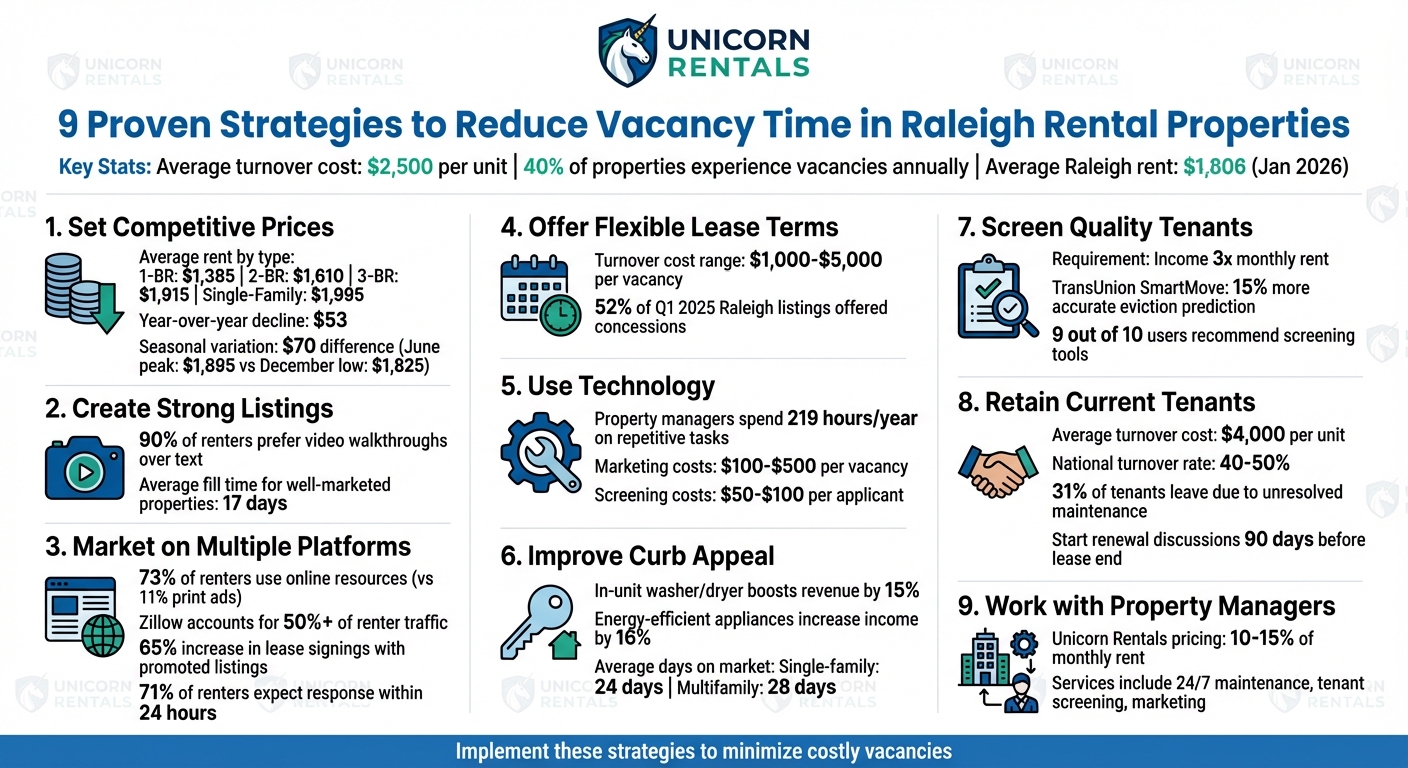
9 Proven Strategies to Reduce Rental Vacancy Time in Raleigh
Tenant Turnover – Minimize Vacancy
1. Set Competitive Rental Prices Based on Raleigh Market Data
Setting the right rental price is key to keeping vacancies low while appealing to savvy Raleigh renters. The goal is to strike a balance: attract reliable tenants while maximizing your income.
As of January 3, 2026, the average rent for all property types in Raleigh is $1,806. This reflects a $53 decline year-over-year and a $29 drop month-over-month. With this downward trend, staying up-to-date with market data is crucial to remain competitive.
Once you’ve established a baseline, the next step is to compare your property to similar ones in the area to ensure your pricing aligns with local standards.
Analyze Similar Properties to Determine Pricing
Start by identifying 5–10 comparable properties nearby. Keep your focus on the immediate area since rental prices can vary significantly between Raleigh neighborhoods. For instance, a three-bedroom unit in North Raleigh will likely rent for a different price than a similar property in Southeast Raleigh, even if they’re just a few miles apart.
To gather data, use platforms like Zillow, Rentometer, and the local Multiple Listing Service (MLS). The MLS is especially useful because it shows actual rental prices – not just listings. Additionally, consider driving through neighborhoods and contacting landlords with "For Rent" signs to get a sense of current pricing.
Pay close attention to days on market (DOM). In Raleigh, single-family homes average 24 days on the market, while multifamily units sit for 28 days. If comparable properties in your area are staying vacant longer than these averages, it’s a sign that the asking prices may be too high. Here’s a breakdown of the current average rents by property type:
| Property Type | Average Rent |
|---|---|
| 1-Bedroom | $1,385 |
| 2-Bedroom | $1,610 |
| 3-Bedroom | $1,915 |
| Single-Family Home | $1,995 |
(Source: Raleigh Market Data, 2025/2026)
Another factor to consider: 52% of Raleigh rental listings in Q1 2025 offered concessions, such as one month free, which is nearly double the national average of 28%. This indicates landlords are actively competing for tenants.
Adjust Rental Prices Based on Seasonal Demand
Raleigh’s rental market has a predictable seasonal rhythm. Demand peaks in the summer months, with average rents climbing to $1,895 in June and August 2025, then dipping to $1,825 by December – a $70 difference. These seasonal shifts can significantly impact how quickly you fill a vacancy.
Summer vacancies tend to attract families moving before the school year and job seekers starting new positions. Winter vacancies, on the other hand, can be more challenging. If your property is vacant in December or January, consider offering move-in perks – like free parking – instead of lowering the base rent permanently.
"Limited vacancies may mean that landlords can be more aggressive with rent rates, but you must first research comparable properties in your area."
– Red Door Company
For existing tenants, implementing small, gradual rent increases – around 5% annually – can be a smarter approach than setting a high initial rate that risks creating a vacancy. A steady, reliable tenant often outweighs the short-term gains of a higher rent.
2. Create Effective Property Listings
Your property listing is often the first impression for potential tenants, so it’s essential to combine quality visuals with a clear, detailed description that resonates with Raleigh renters.
Start with a headline that immediately communicates the essentials: monthly rent, number of bedrooms and bathrooms, property type, and neighborhood. For example: "$1,650/month – 2BR/2BA Condo in North Raleigh". This gives prospective renters key details at a glance. In the property summary, emphasize standout features like hardwood floors, granite countertops, or a private yard. Be upfront about policies on pets and smoking, and include practical details like application fees, credit score requirements, and any other upfront costs. Keep in mind that in North Carolina, security deposits are capped at 1.5 months’ rent for month-to-month leases and two months’ rent for fixed-term leases.
Once the description is polished, make sure your visuals live up to it.
Use Professional Photos and Virtual Tours
High-quality photos can make all the difference when it comes to building trust and attracting interest.
"Investing in high-quality photography is not just about showcasing a property – it’s about creating an emotional connection and building trust with applicants, ultimately leading to faster rental occupations."
– RentRedi
Shoot photos during the golden hour (early morning or late afternoon) for warm, natural lighting that enhances the space. Use landscape mode to capture wide, realistic views of each room, and photograph from angles that showcase the room’s dimensions accurately. A tripod can help keep shots steady and level.
Virtual tours are another powerful tool, especially for remote prospects. Whether through live video calls or pre-recorded walkthroughs, virtual tours are highly effective – 90% of renters prefer a quick walkthrough video over reading extra descriptive text.
Before you start snapping pictures, take time to stage the property. Declutter, remove personal items, and complete any necessary repairs to ensure the space looks move-in ready. Focus on modernized kitchens and bathrooms, as these are often dealmakers for renters. Including a simple black-and-white floor plan can also help tenants visualize how their furniture will fit into the space.
Highlight Features That Raleigh Renters Want
Raleigh renters have clear priorities. High-speed WiFi is a must-have, especially for those working remotely. In-unit washers and dryers, dishwashers, and assigned parking spaces are also highly sought-after conveniences.
If your property is pet-friendly, make sure to mention it. Relaxed pet restrictions and nearby pet-friendly trails can significantly broaden your tenant pool. For properties close to North Carolina State University or Research Triangle Park, highlight proximity to public transit and walkable shopping or dining areas – these are major perks. Energy-efficient upgrades like new windows and doors appeal to renters looking to save on utility costs, while outdoor spaces, whether private yards or nearby parks, should also be prominently featured.
When marketing to young families, focus on practical features like safety, outdoor areas, and proximity to schools. For example, instead of saying “family-friendly,” describe the property as a "three-bedroom home with fenced backyard near Millbrook Elementary". This avoids language that could be misinterpreted while still showcasing the property’s benefits.
"Good pictures are the bread and butter of an enticing rental ad."
– Kaycee Miller, Marketing Manager, Rentec Direct
Properties in good condition, priced at competitive market rates, and marketed effectively can significantly reduce vacancy times. Marketplace Homes reports an average fill time of just 17 days for such listings. A strong, well-crafted listing doesn’t just attract more inquiries – it also sets the stage for faster occupancy, making it a critical step in minimizing vacancy periods.
3. Market Properties Across Multiple Channels
Getting your rental property noticed by the right renters means leveraging multiple platforms. With 73% of renters relying on online resources to find their next home – compared to just 11% who still use print ads – a strong digital strategy isn’t optional; it’s essential. The goal is to maximize visibility where it counts.
"A great rental listing is only effective if the right people see it."
– Micky Deming, Avail
Landlords using promoted listing tools have seen a 65% or more increase in lease signings within 30 days compared to those who don’t. This success comes down to strategic placement on platforms where renters in markets like Raleigh are actively searching. Here’s how to ensure your property stands out.
List Properties on Major Rental Platforms
Start with platforms that dominate the rental market. Zillow alone accounts for over 50% of renter traffic in many cities, making it a must-have for your listing. Beyond Zillow, include Trulia, HotPads, Realtor.com®, Rent., Zumper, Redfin, and ApartmentGuide to cover all bases.
Using syndication tools like Avail can simplify this process, letting you post a single listing that appears on over 22 sites. This approach saves time and ensures your property is visible across multiple channels. When creating your listing, fill out every detail – pet policies, parking options, included utilities – so it doesn’t get filtered out by renters using specific search criteria.
To enhance visibility, include location-based keywords like "downtown Raleigh", "near NC State", or "close to Research Triangle Park".
Use Social Media and Local SEO
While major platforms help you reach a broad audience, social media and local SEO can connect you with renters in your target area.
Social media is particularly effective for younger renters. Focus on 2-3 platforms that make the most sense for your property. Facebook Marketplace is great for local exposure, while Instagram Reels and TikTok allow you to showcase your property through engaging short videos. Use location tags (e.g., Raleigh, NC) and a mix of hashtags like #ApartmentsForRent and #RaleighHousing to reach the right audience. Since 90% of renters prefer video walkthroughs over text descriptions, consider creating short, high-quality tours that highlight your property’s best features.
For local SEO, optimize your website and property listings with Raleigh-specific keywords and neighborhood names. Update meta descriptions and add ALT tags to property images so search engines can properly index your content. With Google accounting for over 85% of mobile search traffic, ensure your listings are mobile-friendly and load quickly. Additionally, list your properties in online directories to boost your website’s authority and improve search rankings.
"SEO is an inexpensive way to connect your properties and services to your ideal renter or owner. It’s all about providing great content and making sure people are able to find it."
– Heather Peake, Writer and Property Manager, Rentec Direct
For even more localized reach, try advertising on regional news sites like the Raleigh News & Observer or the Carolina Journal. You can also place flyers with QR codes in high-traffic areas, directing potential renters straight to your digital listings. These tactics can help fill vacancies faster, reducing costly downtime.
And don’t overlook communication: 71% of renters expect a response within 24 hours of making an inquiry. Quick replies paired with a smart digital strategy will help you secure tenants and keep your properties occupied.
4. Offer Flexible Lease Terms
Sticking to rigid 12-month leases can narrow your tenant pool. In Raleigh’s ever-changing market, offering flexible lease terms – like short-term or month-to-month agreements – can appeal to a broader range of renters, including college students, traveling professionals, and individuals hesitant to commit long-term.
"Offer short-term leases or month-to-month options to attract a wider audience. This can include: College students, traveling professionals, [and] those uncertain about long-term commitments." – PMI Triangle
Flexibility doesn’t have to come at the cost of stability. To encourage longer commitments, consider offering rent discounts to tenants willing to sign 18-month leases instead of the standard 12 months. This approach not only provides financial predictability but also reduces turnover. Additionally, timing lease expirations strategically – aiming for spring or summer rather than winter – can help you re-rent the property during peak leasing seasons when demand is higher.
Month-to-month leases, while offering maximum flexibility, often come with higher monthly rents. This premium helps offset the increased risks of turnover and the administrative costs involved. In North Carolina, either party can terminate a month-to-month lease with proper notice – typically 30 days – so it’s crucial to confirm this requirement. Another option to consider is rent-to-own agreements, which can attract renters looking to transition into homeownership while providing you with steady rental income in the meantime.
It’s worth noting that tenant turnover can be costly. Each vacancy can run you anywhere from $1,000 to over $5,000 due to lost rent, marketing efforts, and repair expenses. Offering incentives like complimentary carpet cleaning or a $100 gift card for lease renewals can be a more affordable way to retain tenants and avoid the hassle of filling vacancies. Keep in mind that North Carolina law permits charging late fees only after rent is overdue by five days or more, with a cap of $15 or 5% of the monthly rent, whichever is greater.
When offering flexible lease terms, make sure all agreements comply with state regulations. Clearly outline notice periods, security deposit limits, and termination conditions to protect both you and your tenants. By doing so, you can attract a diverse tenant base while maintaining a smooth and efficient rental process.
5. Use Technology to Simplify Showings and Applications
In Raleigh’s fast-paced rental market, timing is everything. To stay ahead, streamline your leasing process with tools that simplify communication and speed up tenant acquisition. Online scheduling platforms allow prospects to book tours 24/7, while features like pre-showing verification and smart locks can generate temporary access codes for self-guided tours automatically. These tools reduce barriers in the leasing process and can help improve conversion rates.
But it doesn’t stop at scheduling. Digitizing the approval process is just as important. Electronic signatures make it possible to finalize leases instantly, and property management platforms that bundle income verification, credit reports, and digital signatures into one seamless workflow can significantly cut down approval times. As noted by Mynd Editorial Staff:
"Using technology speeds up the process and significantly reduces the time it takes to place a new resident in the home".
The financial benefits of going digital are hard to ignore. In the Triangle market, vacancies can cost anywhere from $1,000 to $5,000 in lost rent, marketing, and administrative expenses. Marketing alone may range from $100 to $500 per vacancy, with screening costs adding another $50 to $100 per applicant. On top of that, property managers spend an average of 219 hours a year on repetitive tasks that automation could easily handle.
To implement these strategies, start by embedding booking links directly into property listings and social media posts to capture interest immediately. Requiring prospects to view virtual tours before scheduling on-site visits can ensure only serious renters move forward. AI leasing assistants can also respond to inquiries around the clock, providing instant scheduling links even during off-hours. Finally, make sure your scheduling tools sync with your property management software to keep availability updated in real time. By embracing these technologies, you can place tenants faster and align your leasing process with today’s competitive market demands.
sbb-itb-aa27f6d
6. Improve Curb Appeal and Interior Features
While technology helps streamline processes, the visual appeal of a property can significantly impact how quickly vacancies are filled. First impressions matter – a well-kept exterior can set the tone before potential tenants even step inside. Start with landscaping: keep the lawn mowed, trim overgrown plants, pull weeds, and consider adding fresh mulch and climate-appropriate greenery to brighten the space. As Oak City Properties points out:
"A well-maintained lawn and landscape can make your property look more inviting and well-cared for".
The front door is another key element. A fresh coat of paint in a modern, welcoming color and updated hardware, like new handles or knobs, can make a big impact without requiring a large investment. Power washing the siding, driveway, and sidewalks removes dirt and grime, giving the property a clean, polished look. Adding solar-powered lights along walkways not only improves nighttime safety but also enhances the overall aesthetic. Don’t overlook smaller details like replacing a rusty mailbox or repairing cracked steps – these updates help modernize the entryway.
Inside the property, neutral paint tones and durable flooring, such as hardwood, allow tenants to picture their own belongings in the space. Appliances also make a difference. For example, installing in-unit washers and dryers can boost revenue by 15%, while energy-efficient kitchen appliances have the potential to increase rental income by 16%, according to the National Apartment Association.
Upgrading storage options and fixtures – think shelves, cabinets, and kitchen or bathroom elements – offers a cost-effective way to refresh interiors. Marketplace Homes, for instance, reported an average 17-day vacancy period for well-maintained and reasonably priced listings in 2025, showcasing how smart upgrades can reduce downtime.
To keep improvement costs manageable, focus on affordable, high-impact changes. Gradual rent increases of around 5% can help offset upgrade expenses, and offering tenants improvements in exchange for lease renewals can encourage long-term occupancy. By enhancing your property’s curb appeal and interior features, you complement pricing, marketing, and technology efforts to reduce vacancy periods effectively.
7. Screen and Place Quality Tenants
Filling vacancies with dependable tenants quickly is key to minimizing future downtime. A solid screening process helps identify renters who pay on time, treat your property with care, and stick around longer – ultimately cutting down on turnover. As Grafton Perry from Raynor Realty explains:
"Effective tenant screening stands as one of the most crucial aspects of successful property management".
This process sets the stage for long-term stability. Before accepting applications, establish clear, consistent screening criteria that align with fair housing laws and eviction prevention best practices. Common benchmarks include requiring tenants to earn at least three times the monthly rent, maintaining a strong credit history, and showing a positive rental track record. During the initial contact, ask prospective tenants about their reasons for moving, their budget, and their timeline. These early conversations can help you weed out unsuitable candidates.
Each adult applicant should complete a detailed application that includes their legal name, Social Security number, employment history, rental references, and proof of income (e.g., pay stubs, bank statements, or tax returns). Verify their employment and conduct thorough credit and background checks. It’s also wise to contact previous landlords instead of relying solely on the current one for references.
To simplify the process, consider using tools like TransUnion SmartMove. This platform provides comprehensive reports covering credit scores, criminal backgrounds, eviction histories, and income verification. Its ResidentScore is designed to predict eviction risk 15% more accurately than traditional credit scores, and 9 out of 10 users recommend the service. Pricing starts at $25 for basic criminal background checks and goes up to $47 for premium packages that include income insights and identity verification.
Keep your screening process objective and compliant with fair housing laws by using a systematic checklist to document decisions. If you need to deny an application, issue a legally compliant adverse action notice. As KRS Property Management highlights:
"A well-screened tenant is more likely to pay rent on time, take care of the property, and stay long-term – helping you reduce vacancies and maximize your investment returns".
8. Keep Current Tenants Through Retention Programs
Attracting new tenants is important, but keeping your current residents satisfied is just as crucial – if not more so – when it comes to reducing vacancies. Retaining tenants is far less expensive than dealing with turnover. On average, tenant turnover costs landlords around $4,000 per unit, and with national apartment turnover rates ranging from 40% to 50%, focusing on tenant satisfaction should be a top priority.
Responsive maintenance is a game-changer – 31% of tenants leave due to unresolved maintenance issues. As KRS Property Management explains:
"If you are an unresponsive landlord, your vacancy rates will undoubtedly go up. In fact, one of the top reasons that tenants quote for leaving their rented premises has to do with maintenance".
To avoid this, consider establishing a 24/7 online maintenance request system and conducting quarterly property inspections. These measures can help address minor issues before they escalate into major frustrations.
Open communication is essential. Use multiple channels – text, email, or phone – and schedule regular check-ins with tenants. This proactive approach can help resolve concerns early, preventing tenants from considering a move. Block & Associates Realty highlights:
"The best way to gauge your residents’ satisfaction with their surroundings is by keeping in touch with them. Tune into their frustrations and listen to their concerns to see if there’s anything within your control that you can change so they feel more comfortable staying".
Start lease renewal discussions 90 days before the lease ends. Offering incentives like locked-in rent rates, first-month discounts, or perks such as free parking can encourage tenants to renew. Kaycee Miller from Rentec Direct suggests:
"If you find that a tenant is on the fence about whether or not they want to renew, think about offering one month of free rent. It’s a deal they’ll find hard to turn down".
Allowing tenants to personalize their space, like choosing paint colors, can also foster a sense of ownership and engagement.
Modern amenities can tip the scales in your favor. Features such as keyless entry, smart thermostats, high-speed internet, bike storage, secure package lockers, and EV charging stations provide compelling reasons for tenants to stay. These upgrades, paired with competitive pricing and thoughtful marketing, not only reduce vacancies but also lower turnover costs and stabilize your income. Together, these strategies and proactive management practices can help ensure Raleigh properties remain fully occupied.
9. Work with Unicorn Rentals for Property Management
Managing rental properties can be challenging, especially when it comes to minimizing vacancies. That’s where Unicorn Rentals steps in, offering expert property management services designed to keep properties in Raleigh consistently occupied. They tackle every stage of the rental process, from marketing to tenant retention, ensuring landlords can focus on other responsibilities.
Their "No Vacancy" strategy is a game-changer. It combines multi-channel marketing efforts – think Zillow, Trulia, social media outreach, and a database of pre-qualified tenants – with power open houses. These open houses allow multiple potential tenants to view a property at once, creating urgency and encouraging faster applications. With dedicated leasing agents focused solely on finding qualified tenants, your property is in good hands.
Services Offered by Unicorn Rentals
Unicorn Rentals takes the hassle out of property management by offering full-service solutions for residential properties in Raleigh, Durham, Chapel Hill, and the surrounding Triangle area. Here’s what they provide:
- Professional marketing: Includes HDR photography and virtual tours to showcase your property.
- Thorough tenant screening: Covers credit, criminal, eviction, and income checks to ensure reliable tenants.
- Rent collection: Streamlined systems for on-time payments.
- 24/7 maintenance coordination: Quick responses to tenant requests.
- Financial reporting: Transparent reports to keep you informed.
- Regular property inspections: Ensures your property stays in great condition.
For those who want more, higher-tier plans include perks like loss of rent guarantees, eviction assistance, tenant damage coverage, and liability protection. Premium plans go even further, offering no repair markups, free lease renewals, reduced tenant placement fees, and preventive maintenance inspections – all aimed at reducing turnover costs and keeping properties occupied.
Unicorn Rentals Pricing Plans
Unicorn Rentals offers flexible pricing plans to match different needs, making property management more accessible:
| Plan | Monthly Fee | Key Features | Best For |
|---|---|---|---|
| Tier 1 – Standard | 10% of rent (7% for 5+ units) | Marketing, tenant screening, rent collection, maintenance coordination, financial reporting | Landlords needing essential services |
| Tier 2 – Value+ | 13% of rent (10% for 5+ units) | Everything in Tier 1 + loss of rent guarantee, eviction guarantee, malicious damage coverage, liability coverage | Properties renting for $1,500/month or more that require added protection |
| Tier 3 – Premium | 15% of rent (12% for 5+ units) | Everything in Tier 1 & 2 + no repair markups, free lease renewals, discounted tenant placement, preventive inspections | Landlords focused on long-term savings and tenant retention |
With no setup costs or hidden fees, and discounts for managing five or more units, Unicorn Rentals takes care of the time-consuming aspects of property management. From marketing and tenant communication to handling maintenance requests, they help landlords in Raleigh maintain steady occupancy while avoiding the headaches of turnover.
Conclusion
Minimizing vacancy time in Raleigh’s rental market calls for a thoughtful and proactive approach. By leveraging strategies like setting competitive rental rates based on local market trends, improving curb appeal, and offering flexible lease options, you can keep your properties occupied and generating income.
Vacancies and tenant turnover can quickly become costly. As Dave Spooner, CEO of Innago, explains:
"The average cost of tenant turnover today amounts to $2,500 per unit. Even one unit sitting vacant is an expense you can’t afford."
Focusing on tenant retention is equally important. Reaching out to tenants 90 days before their lease ends gives you a better chance of securing renewals before they start considering other options. Since landlords typically handle about six maintenance requests per year, responding quickly to repair needs is essential. Maintenance issues are one of the leading reasons tenants choose to leave, so addressing them promptly can make a significant difference. Combining these retention practices with effective management strategies can streamline your operations further.
If managing all these tasks feels overwhelming, professional property management can be a game-changer. Partnering with Unicorn Rentals, for example, can simplify day-to-day operations and help you maintain low vacancy rates.
Whether you prefer managing on your own or working with professionals, taking proactive steps is essential in Raleigh’s competitive rental market. By staying in tune with tenant needs and keeping your properties appealing, you’ll be well-positioned for long-term success.
FAQs
What are the advantages of offering flexible lease terms for Raleigh rental properties?
Offering flexible lease terms is a smart way for Raleigh landlords to cut down on vacancy time. By including options like month-to-month agreements, short-term leases, or even tailored lease lengths, you open the door to a broader pool of potential tenants. This approach appeals to groups like students, seasonal employees, and individuals in transitional housing, allowing you to fill empty units more quickly and maintain a steady flow of rental income.
On top of that, flexible leases can boost tenant satisfaction. When renters feel their needs are being met, they’re more likely to renew their lease or extend their stay. This means fewer expenses for advertising, tenant screening, and preparing units for new occupants. In the long run, offering adaptable lease options doesn’t just reduce downtime – it helps create a more reliable and profitable rental portfolio.
How can technology make renting out a property faster and easier?
Technology has transformed the rental process, making it faster and more efficient by automating essential steps. With digital platforms, landlords can instantly share property listings with a broader audience. Tools like high-resolution photos, video tours, and 3D virtual walkthroughs allow potential tenants to explore properties from anywhere, eliminating the need for in-person visits. Features like self-scheduling tools and online application portals let renters book viewings and submit documents on their own schedule, ensuring nothing slips through the cracks.
On the backend, property management software takes care of time-consuming tasks like tenant screening, lease creation, and rent collection. Screening services can quickly verify credit scores, criminal records, and eviction histories. Leases can be signed electronically and stored securely online, while digital rent payment systems track transactions in real-time, offering clear financial insights. Together, these tools help landlords stay organized, reduce vacancy periods, and provide a smoother rental experience for everyone involved.
Why is it important to retain tenants to reduce vacancy costs?
Keeping tenants happy is crucial for cutting vacancy costs, as it helps dodge the hefty expenses tied to turnover. Every time a rental unit sits empty, landlords often shoulder costs like lost rent, marketing efforts, necessary repairs, and administrative tasks. These expenses can quickly add up, ranging anywhere from $1,000 to $5,000 or more per turnover.
Retaining dependable tenants doesn’t just save you money – it also spares you the hassle of screening and securing new renters. Building good relationships with tenants and addressing their concerns promptly can make all the difference. When tenants feel valued and heard, they’re more likely to renew their lease, ensuring a consistent income and minimizing downtime between renters.
Related Blog Posts
- Raleigh & Durham Rental Market 2026: Trends, Rent Forecasts, and What It Means for Landlords
- How Much Should You Charge for Rent in Raleigh, Durham & Chapel Hill in 2026 (By Bedroom & Neighborhood)
- Renting vs. Buying in the Triangle: A Complete Cost and Lifestyle Comparison for First-Timers
- Best Neighborhoods in Apex for Short-Term Rentals