
Owning rental properties in Raleigh, Durham, or Chapel Hill can be profitable, but it comes with risks like tenant turnover, property damage, severe weather, and legal obligations. Here are seven practical strategies to protect your investment and minimize risks:
- Hire a Property Management Company: Professionals handle tenant screening, maintenance, and legal compliance, reducing costly mistakes.
- Thorough Tenant Screening: Vet tenants with income checks, credit scores, and background reviews to avoid evictions and late payments.
- Landlord Insurance: Specialized policies cover property damage, liability, and lost rental income, especially critical in weather-prone areas.
- Scheduled Maintenance: Regular upkeep prevents expensive repairs and ensures compliance with habitability laws.
- Routine Inspections: Identify issues early and ensure tenants follow lease terms to avoid costly damages.
- Clear Lease Agreements: Detailed leases reduce misunderstandings and protect against legal disputes.
- 24/7 Emergency Response: Quick action on urgent issues prevents major repairs and keeps tenants satisfied.
These steps help landlords maintain property value, reduce financial losses, and attract reliable tenants in the competitive Triangle market.
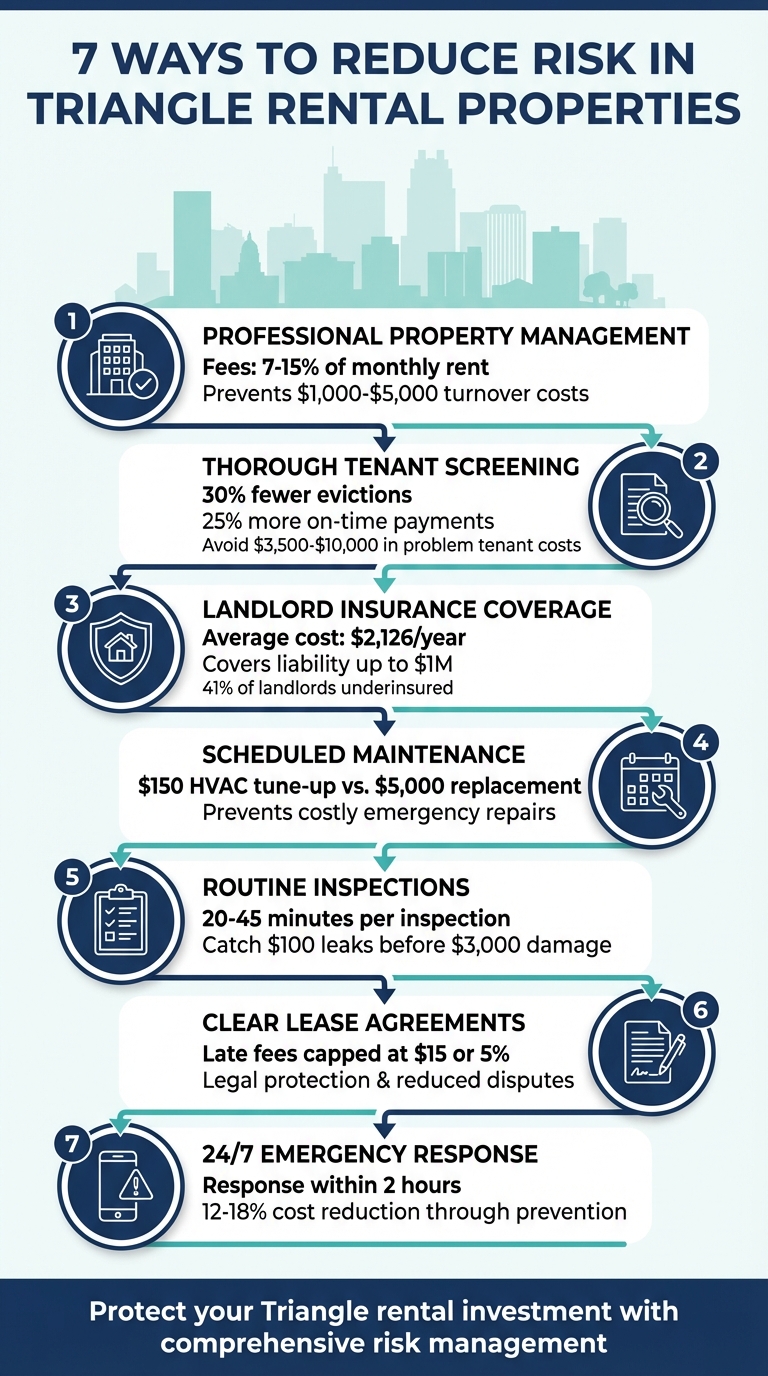
7 Risk Reduction Strategies for Triangle Rental Properties
Rental Property Risk! Explained by a Professional Property Manager
sbb-itb-aa27f6d
1. Professional Property Management Services
Handing over daily operations to a property management company tackles multiple risks simultaneously. These experts ensure your property aligns with North Carolina’s habitability standards, including maintaining functional electrical, plumbing, and heating systems. They also handle tenant screening, coordinate maintenance, and ensure legal compliance, all of which help reduce risk. As Keyrenter Raleigh emphasizes:
The best way to ensure compliance as a rental owner is to partner with a property management team.
In the Triangle region, companies like Unicorn Rentals (https://unicornrentals.us) offer comprehensive property management services in Raleigh, Durham, Chapel Hill, and nearby areas. By entrusting these tasks to professionals, landlords can efficiently address common risks and streamline operations.
Risk Reduction Potential
Property managers conduct thorough tenant screenings, reviewing credit, employment, and rental histories to minimize the likelihood of issues. They also schedule regular maintenance, such as biannual HVAC servicing and gutter cleaning, which are especially important in the humid Triangle climate to prevent mold and water damage. Robert Dell’Osso, CEO of MasterKey Property Management, points out:
Placing the wrong tenant is the #1 cause of early lease breaks. That’s why we never skip steps in our screening process.
These proactive measures not only reduce immediate risks but also promote long-term financial stability for landlords.
Cost-Effectiveness
Effective property management does more than reduce risks – it also protects your financial interests. Management fees typically range from 7% to 15% of monthly rent, depending on the size of your portfolio and the level of service. However, the costs of not hiring a professional can be far greater. high tenant turnover alone can cost Tenant turnover alone can cost $1,000–$5,000 per incident,000–$5,000 per incident, factoring in 1–2 months of lost rent, $100–$500 in marketing expenses, and $500–$2,500 in turnover repairs. Additionally, professional managers often have established vendor relationships, allowing them to secure lower maintenance rates that individual landlords may not be able to access.
Long-Term Benefits
The advantages of professional management extend well beyond immediate savings. By taking care of daily operations, landlords can focus on exploring new investment opportunities in the Triangle’s rapidly growing market, which sees an influx of 179 new residents every day. Regular inspections and proactive maintenance help extend the lifespan of equipment and preserve property value. Meanwhile, staying compliant with legal requirements reduces the likelihood of fines or litigation. Quick responses to maintenance requests also improve tenant satisfaction, boosting retention rates and ensuring steady cash flow.
2. Complete Tenant Screening Process
While property management services can take care of many responsibilities, understanding the tenant screening process is essential for minimizing risks. In the Triangle rental market, a thorough screening process is just as important as regular property maintenance. Why? Because it significantly reduces common rental risks. Properties that conduct detailed tenant vetting experience 30% fewer evictions and see 25% more on-time rent payments. On the flip side, skipping this step can be costly – problematic tenants can rack up $3,500 to $10,000 in lost rent, legal fees, and property repairs. Despite this, around 40% of landlords still avoid comprehensive screening.
Risk Reduction Potential
A strong screening process tackles multiple risk factors at once. For instance, applying the "3x income rule" – requiring tenants to earn at least three times the monthly rent – is a common practice. Checking references from previous landlords is also key, as current landlords might provide overly positive feedback to encourage a troublesome tenant to move on. As Real Property Management Champion highlights:
Previous evictions are one of the strongest predictors of future tenancy problems.
Background checks are another must. These should cover criminal history, eviction records, and credit scores, with most landlords in the Triangle setting a minimum score between 620 and 650. To combat fraud, verify applicants’ identities by matching government-issued IDs with their application details – this step is especially critical in fast-paced markets like Raleigh. Together, these measures align seamlessly with broader property management strategies.
Ease of Implementation
For landlords looking for a hands-off approach, companies like Unicorn Rentals (https://unicornrentals.us) offer tenant screening as part of their property management services in Raleigh, Durham, and Chapel Hill. Their standardized process ensures compliance with Fair Housing laws while efficiently filtering applicants. A structured screening system not only saves time but also ensures consistency throughout the selection process.
Long-Term Benefits
Thorough tenant screening pays off in the long run. Reliable tenants, carefully vetted, are more likely to stay longer, reducing vacancies and turnover rates. They also tend to take better care of the property, which means fewer repair expenses over time. By securing dependable renters, landlords protect their investments from unnecessary costs tied to vacancies and property damage. Shelly Henderson, Co-founder of Henderson Properties, puts it plainly:
Tenant screening in the Carolinas works best when it’s systematic. Without a defined process, landlords risk wasted time, inconsistent decisions, longer vacancies, and the wrong resident in the home.
Moreover, applying consistent, written screening criteria provides an added layer of legal protection. By treating all applicants equally, landlords can avoid discrimination claims while ensuring their Triangle properties are entrusted to tenants who will treat them responsibly.
3. Landlord Insurance Coverage
Just like thorough tenant screening and professional property management, having solid landlord insurance is a must for reducing risks in Triangle rental properties. Regular homeowners insurance only covers owner-occupied homes, meaning it often falls short when you need it most. A specialized landlord insurance policy is designed to cover the unique risks tied to renting out properties in areas like Raleigh, Durham, and Chapel Hill. Surprisingly, a 2024 survey found that 41% of landlords were not properly insured, often relying on insufficient policies.
Risk Reduction Potential
Landlord insurance tackles several risk factors at once. Dwelling coverage protects your property’s structure from dangers like fire, lightning, wind, and hail. Liability protection covers legal fees and medical costs if someone is injured on your property, with coverage limits ranging from $300,000 to $1 million. Additionally, loss of rental income coverage reimburses you for lost rent if your property becomes uninhabitable due to a covered event, helping you stay on top of mortgage payments while repairs are underway. As Barber Insurance Agency explains:
The value of good insurance should not be underestimated because it could be the difference between a minor inconvenience and a financial nightmare.
For landlords in the Triangle, a DP-3 policy is highly recommended. Unlike basic DP-1 policies that only cover specific risks, DP-3 policies offer "open peril" coverage, meaning they protect against all risks unless explicitly excluded. They also pay out replacement cost rather than the depreciated value of your property. Given North Carolina’s vulnerability to hurricanes and severe storms, adding flood insurance is a wise choice, as standard policies do not cover flood damage. These comprehensive options are crucial for managing the unique challenges of Triangle rental properties.
Cost-Effectiveness
Landlord insurance not only protects your property but also offers financial advantages. The average annual premium for a $300,000 property is $2,126, and this expense is fully tax-deductible as a business cost. DP-3 policies typically cost between $1,100 and $1,300 annually, compared to $700–$900 for basic DP-1 policies. You can lower premiums by bundling landlord insurance with other policies like auto or home insurance and by installing safety features such as deadbolts, smoke detectors, or smart devices like leak sensors.
Another smart strategy is requiring tenants to carry renters insurance with at least $100,000 in liability coverage. Currently, 72% of landlords include this as a lease condition. This shifts the burden of tenant property loss and certain liabilities away from you, adding an extra layer of protection without increasing your costs.
Long-Term Benefits
Comprehensive landlord insurance is a long-term safeguard for your investment, covering replacement costs and reducing the need for out-of-pocket expenses after significant damage. If you own multiple properties in the Triangle, adding an umbrella policy – costing $150–$500 annually for $1 million in coverage – provides extra liability protection beyond standard policy limits. Since 1980, the U.S. has experienced 400 weather and climate disasters with damages exceeding $1 billion each. This makes having comprehensive coverage a critical step in protecting your rental property investments in the Triangle area.
4. Scheduled Property Maintenance
Scheduled maintenance is more than just upkeep – it’s a smart way to manage risks and protect your investment.
Risk Reduction Potential
Regular maintenance helps you catch small problems before they turn into big, expensive ones. For example, replacing a missing roof shingle can prevent water damage that could cost thousands to fix. Similarly, addressing a small leak early avoids the nightmare of water damage and mold. Beyond saving money, staying on top of maintenance ensures you’re meeting North Carolina habitability laws, reducing the chances of legal disputes or rent-withholding situations.
The financial contrast between preventative and reactive maintenance speaks for itself. Take HVAC systems, for instance – a $150 tune-up can save you from a $5,000 emergency replacement. Or consider plumbing: a $100 inspection can prevent $3,000 in damage to cabinets and subfloors. Tarik Khribech, Founder & CEO of AllBetter, sums it up perfectly:
Owning rental property is not risky. Ignoring small problems is.
In North Carolina’s humid climate, HVAC systems take a beating. Annual servicing is a must to avoid costly breakdowns during peak seasons.
Ease of Implementation
Getting a maintenance schedule up and running doesn’t have to be complicated. Start by focusing on "critical components prone to high repair costs", like water systems, HVAC units, and roofing. Standardized checklists and recurring service dates can help you stay organized while minimizing disruptions for tenants.
Many landlords in the Triangle area already schedule regular services like HVAC tune-ups and gutter cleaning. Property management companies, such as Unicorn Rentals, can handle everything from vendor coordination to 24/7 emergency responses, which is especially helpful as safety regulations grow more complex. These scheduled visits can also uncover hidden issues, like leaks or unauthorized pets, ensuring your property stays in top shape.
Cost-Effectiveness
Preventative maintenance is a fraction of the cost of emergency repairs. Spending a little upfront on durable materials, like high-quality paint, can save you from frequent and costly replacements later.
| Scenario | Preventative Visit | Emergency Repair |
|---|---|---|
| Sink Leak | $100 (Inspection) | $3,000 (Cabinet + Subfloor) |
| HVAC Failure | $150 (Tune-up) | $5,000 (Full Replacement) |
| Gutter Overflow | $200 (Cleaning) | $4,000 (Foundation Damage) |
Keeping records of your maintenance expenses, along with photos, not only helps with tax deductions but also strengthens liability claims if needed. With Raleigh studio apartments averaging $1,331 per month in rent, scheduled maintenance is a small price to pay for long-term peace of mind.
Long-Term Benefits
Consistent maintenance does more than just preserve your property – it builds trust with tenants, which can lead to higher retention rates and lower turnover costs. Jessica Landingham of Peak Residential, Inc. puts it this way:
Preventative maintenance might not sound as exciting as renovations or new investments, but… it’s one of the most powerful tools for saving time and money in the long run.
In competitive markets like Raleigh and Durham, a well-maintained property stands out. It attracts reliable tenants, commands better rents, and retains its market value and curb appeal. Routine check-ups for local issues – like termites, wood rot, and pest infestations – further protect your investment. And don’t forget to replace smoke and carbon monoxide detectors every 7 to 10 years to stay compliant with North Carolina safety standards.
Scheduled maintenance isn’t just about avoiding headaches; it’s a smart way to keep your property profitable and your tenants happy.
5. Routine Property Inspections
Risk Reduction Potential
Routine property inspections are your first line of defense against expensive damages. For instance, a small leak might seem minor but could hint at a much larger issue if left unchecked. Beyond catching physical problems early, inspections ensure compliance with North Carolina’s Residential Rental Agreements Act, requiring landlords to maintain essential systems like electrical, plumbing, and heating in safe working order. By addressing potential issues early, inspections work hand-in-hand with scheduled maintenance, preventing problems from escalating into costly repairs. They also help identify lease violations sooner, keeping your property compliant and well-maintained as part of a broader risk management strategy.
Ease of Implementation
Incorporating inspections into your routine is straightforward, especially if you’re already performing regular maintenance. A typical walk-through takes just 20–45 minutes. Using a standardized checklist can help you stay organized – covering essentials like smoke detectors, GFCI outlets, plumbing, HVAC systems, and structural components. Documenting your findings with time-stamped photos or videos is key for tracking property changes and supporting deposit claims.
Although North Carolina law doesn’t specify a required notice period, providing 24 to 48 hours’ written notice respects tenants’ privacy and maintains professionalism. If managing inspections yourself feels overwhelming, property management services like Unicorn Rentals can handle everything – from the inspection itself to documentation and arranging follow-up repairs. This is especially helpful if you oversee multiple properties.
Cost-Effectiveness
Catching problems early can save you a lot of money. For example, addressing a slow leak during an inspection might only cost $100. But if that same issue goes unnoticed until move-out, it could lead to $3,000 in cabinet and subfloor replacements. The same principle applies to HVAC systems – routine checks can often catch a failing component that can be repaired before it turns into a full system replacement during the peak of summer.
Thorough documentation during move-in and move-out inspections also safeguards your security deposits. By clearly distinguishing between pre-existing damage and tenant-related issues, you minimize disputes and protect your investment.
Long-Term Benefits
Consistent inspections do more than just protect your property – they build trust with your tenants. When tenants see that you’re committed to maintaining a safe and functional home, they’re more likely to renew their leases, reducing turnover costs and vacancy periods. This can make a big difference in competitive rental markets like Raleigh and Durham, where the average studio apartment rents for $1,331 per month.
Routine check-ups also help maintain your property’s market value. In the Triangle’s humid climate, staying ahead of problems like moisture damage, pest infestations (e.g., termites and rodents), and HVAC wear ensures your property remains attractive to quality tenants. As Keyrenter Raleigh points out:
In a competitive market like Raleigh, where renters expect modern housing, functional systems, and responsive owners, safety is a major factor in your property’s reputation.
6. Clear Lease Terms and Enforcement
Risk Reduction Potential
Clear lease terms play a critical role in minimizing operational and financial risks for Triangle rental properties. Think of a well-written lease as your legal safety net, protecting you from misunderstandings and disputes. As IPM Property Management explains:
A rental agreement is a legal document that outlines the terms and conditions under which a tenant will occupy a landlord’s property. It is crucial for preventing misunderstandings and legal disputes.
A written lease not only helps avoid misinterpretation in court but also serves as enforceable proof of the agreement. Key elements to include are the full legal names of all adult occupants, specific rent amounts and due dates, and clear assignments for maintenance responsibilities. If you’re renting out a home built before 1978 in North Carolina, you’re required to disclose any lead-based paint hazards. Additionally, any existing structural damage must be noted. Setting occupancy limits and prohibiting activities like smoking can further protect your property and ensure compliance with local health and safety codes.
Ease of Implementation
Drafting an effective lease requires precision and attention to detail. Use specific dates (e.g., "January 1, 2026, to December 31, 2026") to avoid confusion. North Carolina has several specific requirements you must follow, such as late fees being capped at $15 or 5% of the monthly rent (whichever is greater), a mandatory 5-day grace period for late payments, and limits on security deposits (1.5 times the monthly rent for month-to-month agreements or 2 times for fixed-term leases).
Although North Carolina doesn’t require a set notice period for landlord entry, adding a clause for 24 to 48 hours’ notice for non-emergency visits can help avoid privacy disputes. It’s also essential to differentiate between normal wear and tear – like faded paint – and tenant-caused damage, such as graffiti, to prevent conflicts over security deposits. A clear, detailed lease not only simplifies management but also protects your financial interests.
Cost-Effectiveness
Having clear lease terms in place safeguards your financial health from the start. North Carolina allows landlords to include a forfeiture clause, which can waive or modify the default 10-day notice requirement for nonpayment of rent. This can make the eviction process more efficient if needed. You can also recover attorneys’ fees – typically capped at 15% of the owed amount – if this is specified in the lease.
Preventing problems early saves money by reducing the likelihood of costly repairs or disputes. When tenants understand their responsibilities from the beginning, issues like property neglect or neighbor complaints are less likely to arise. And if problems do occur, North Carolina’s small claims court, which handles cases up to $10,000, offers a practical way to resolve disputes.
Long-Term Benefits
Clear lease terms provide lasting benefits that go beyond financial savings. Consistent enforcement fosters a professional rapport with tenants and sets the tone for a positive rental experience. When lease terms are explicit, tenants are more likely to report maintenance issues promptly and take responsibility for any damage, which helps maintain your property’s value. This approach is especially critical in the Triangle’s humid climate, where unaddressed moisture problems can quickly worsen.
As Keyrenter Raleigh emphasizes:
Smart landlords operate like businesses, with clear documentation. Keep detailed records of repairs and inspections, service invoices, tenant communications, and safety certifications.
If drafting and enforcing leases feels overwhelming, property management services like Unicorn Rentals can handle the process for you. They ensure compliance with North Carolina regulations while maintaining consistent standards across your rental properties in the Triangle area.
7. 24/7 Emergency Maintenance Response
Risk Reduction Potential
Addressing emergencies quickly can save thousands. For instance, fixing a small leak promptly can prevent it from turning into a $4,000 repair job. In regions like the Triangle, where high humidity accelerates mold growth, water damage can become a habitability issue in just a few hours. North Carolina’s Residential Rental Agreements Act mandates landlords to maintain essential systems like electrical, plumbing, and heating. Neglecting critical failures – such as no heat during a cold snap below 50°F or no air conditioning when temperatures rise above 85°F – can lead to legal consequences, including rent withholding and penalties. Real Property Management of the Triad emphasizes the urgency:
A small plumbing issue can become a flooded bathroom overnight… Hesitation in addressing these problems can also result in legal exposure.
Delays not only increase repair costs but also elevate legal and liability risks.
Ease of Implementation
Establishing a reliable emergency response system doesn’t have to be complicated. You can outsource after-hours calls to property management companies offering 24/7 support or use specialized answering services to handle initial triage. Implement a structured response system: respond to emergencies within 2 hours, critical issues within 4–8 hours, and non-urgent repairs within 24–48 hours. Building a network of trusted contractors – ideally two or three for plumbing, electrical, and HVAC services – ensures swift action when problems arise. This organized approach not only minimizes response times but also helps prevent minor issues from ballooning into costly repairs.
Cost-Effectiveness
Emergency plumbing repairs typically range from $500 to $2,000. But being prepared can lead to significant savings. Logan Anderson, Director of Strategy & Growth at Re-Leased, highlights this point:
Each dollar invested in preparedness can yield double-digit savings in avoided losses. That is smart risk management and smart business.
Preventive maintenance programs, informed by emergency data, can cut property costs by 12–18% and deliver up to a 4× return on investment. Mature programs may even reduce future emergency calls by 30–50%. Investing in preparedness pays off by lowering both immediate and long-term expenses.
Long-Term Benefits
Pairing a 24/7 emergency response system with routine maintenance and inspections strengthens tenant relationships and boosts property value. Properties with clear emergency protocols often see higher tenant satisfaction and improved lease renewal rates. When tenants trust that urgent issues will be handled promptly, they’re more likely to report problems early – before they escalate into expensive disasters. This proactive communication protects your investment and reduces tenant turnover.
Services like those offered by Unicorn Rentals (https://unicornrentals.us) integrate 24/7 emergency response into a broader risk management strategy. Their system ensures compliance with North Carolina regulations while protecting properties from preventable damage. By documenting incidents with timestamped photos and vendor invoices, they also simplify insurance claims, which must be submitted within 30 days.
Conclusion
Safeguarding your Triangle rental property requires a well-rounded, thoughtful approach. The seven strategies discussed earlier work in unison to protect you from legal troubles, financial setbacks, and property damage, all while fostering positive relationships with your tenants. By combining professional management, detailed tenant screening, solid insurance coverage, consistent maintenance and inspections, clear lease agreements, and round-the-clock emergency support, you can ensure compliance with the North Carolina Residential Rental Agreements Act and local building codes.
These steps are not just about avoiding problems – they actively help you attract reliable tenants who pay on time and treat your property with care. A thorough tenant screening process can save you from costly lease violations and frequent turnover, while regular maintenance and documentation preserve your property’s value and reduce the risk of disputes. This is especially important in the Triangle’s humid climate, where challenges like water damage or mold can escalate quickly if left unchecked.
For landlords who find managing all these tasks overwhelming, professional property management services can simplify the process. Unicorn Rentals (https://unicornrentals.us) offers full-service solutions across Raleigh, Durham, Chapel Hill, and the broader Triangle area. Their services include tenant screening, 24/7 maintenance coordination, financial reporting, and property inspections. With tiered pricing starting at 10% of monthly rent, higher plans also provide added benefits like rent loss guarantees, eviction support, and preventive maintenance inspections.
The Triangle’s rental market, fueled by students, professionals, and families, rewards properties that prioritize safety and responsiveness. Homes that meet modern standards and handle emergencies effectively can command higher rents and maintain lower vacancy rates. By implementing these seven strategies, you’re not just protecting your property – you’re setting it up to succeed in one of North Carolina’s most competitive rental markets.
FAQs
How do I pick the right landlord insurance for a Triangle rental?
When selecting landlord insurance for a rental property in the Triangle area, it’s essential to prioritize coverage for property damage, liability, and loss of income. Compare different policies by looking at factors such as the property’s age, its location, and even your credit history. Make sure the insurance also covers risks specific to North Carolina, like hurricanes and flooding, so your investment is well-protected.
What screening rules keep me Fair Housing compliant in North Carolina?
To follow Fair Housing laws in North Carolina, it’s essential to avoid any form of discrimination based on race, color, religion, sex, national origin, disability, or familial status. Your tenant screening process should be fair and in line with federal and state regulations, including the HUD guidelines and the North Carolina Fair Housing Act. Make sure to apply the same screening standards to every applicant to ensure fairness and stay within the law.
How often should I perform maintenance and inspections to avoid major repairs?
Regular maintenance and yearly inspections are essential to catch potential problems early, avoid expensive repairs, and maintain safety. These routine checks also help ensure your property stays in line with legal requirements.
Related Blog Posts
- Raleigh & Durham Rental Market 2026: Trends, Rent Forecasts, and What It Means for Landlords
- The Landlord’s Guide to Avoiding Eviction: Legal Steps and Best Practices for NC Rental Owners
- How to Reduce Vacancy Time in Raleigh Rental Properties: 9 Proven Strategies
- How to Find Reliable Handyman Services for Airbnb in Raleigh