
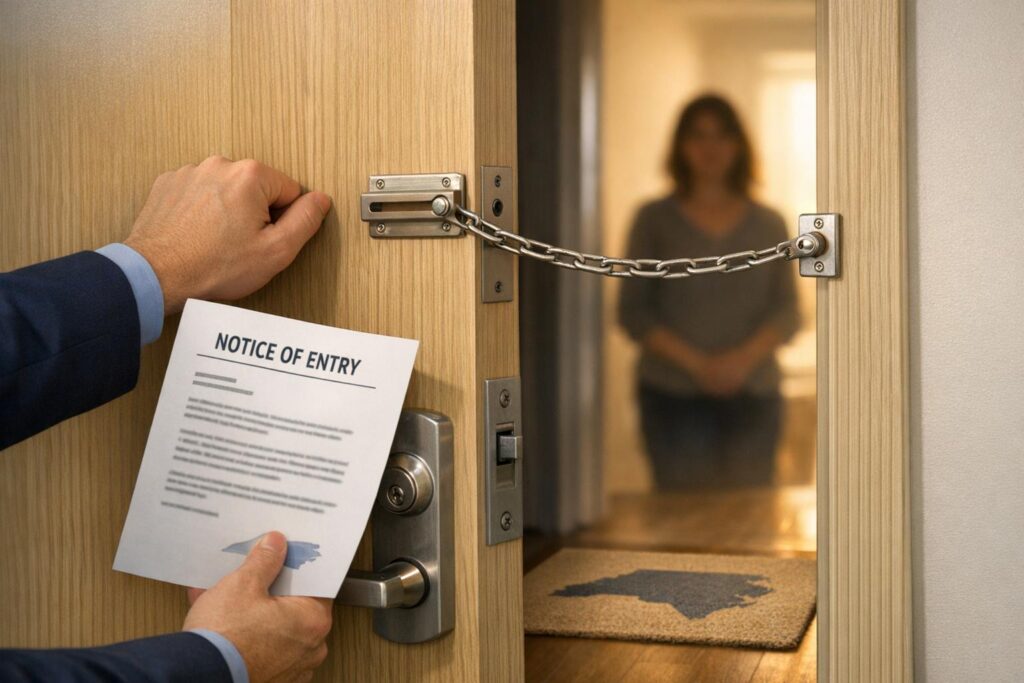
North Carolina rental laws create a delicate balance between tenant privacy and landlord access. While landlords are responsible for maintaining safe, livable properties, tenants are entitled to privacy and peaceful enjoyment of their homes. Here’s what you need to know:
- No mandatory notice period: NC laws don’t require landlords to provide notice before entering a rental property. However, courts often expect "reasonable notice", typically 24 hours for non-emergency visits.
- Emergencies: Landlords can enter immediately during emergencies like fires or floods.
- Quiet enjoyment: Tenants have the right to live without frequent, unannounced disruptions.
- Lease agreements: Clear entry terms (e.g., 24-48 hours’ notice) in well-drafted NC leases can prevent disputes.
Landlords and tenants should prioritize communication and documentation to avoid conflicts. Including entry rules in the lease and providing written notices – via email, text, or letter – helps maintain a respectful relationship.
Your Guide To North Carolina Landlord Tenant Laws And Rights
sbb-itb-aa27f6d
Tenant Privacy Rights Under North Carolina Law
Tenant privacy rights play a key role in balancing the relationship between landlords and tenants, complementing the rules governing landlord access. In North Carolina, the law ensures that tenants are protected from unnecessary interference in their homes.
Right to Quiet Enjoyment
Every rental agreement in North Carolina includes an implied promise of quiet enjoyment. According to NC General Statutes § 42-59.1, tenants are entitled to “the peaceful, safe, and quiet enjoyment of their homes”. This means tenants have the right to live in their rental property without unnecessary disruptions. While landlords may enter the property for emergencies or essential repairs, frequent and unannounced visits for non-emergency reasons can violate this protection.
Isaac Sturgill, Charlotte Housing Project Director for Legal Aid of North Carolina, clarifies this further: “A landlord who shows up unexpectedly, often, and without a legitimate reason to do so would likely be violating the tenant’s right to quiet enjoyment”.
If this right is violated, tenants may have legal recourse, including recovering possession of the property, ending the lease, or seeking actual damages under NCGS § 42-25.9. However, North Carolina law does not allow tenants to claim punitive damages or compensation for emotional distress in such cases.
This right not only ensures a peaceful living environment but also establishes a foundation for protecting tenant privacy against unwarranted intrusions.
Protection Against Unreasonable Intrusions
Beyond quiet enjoyment, tenants in North Carolina are safeguarded against intrusive behavior from landlords. Landlords are prohibited from searching a tenant’s personal belongings, going through drawers, or interfering with private possessions – even during legitimate maintenance visits.
Unreasonable intrusions include unauthorized entries, repeated visits without notice for non-urgent matters, or accessing the property without a valid reason. Tenants facing such behavior should document each incident, noting dates and specific details. For additional support, they can reach out to Legal Aid of North Carolina or file a consumer complaint with the North Carolina Attorney General‘s office.
Landlord Access Rights Under North Carolina Law
In North Carolina, landlords have the right to access rental properties for rental property management in Raleigh, NC, but they must balance this with respecting tenant privacy. Interestingly, the state does not have a specific law that sets mandatory notice periods or clearly outlines when landlords can enter a rental property. In fact, North Carolina is among 13 states without such a requirement.
Instead, the standard here revolves around a "reasonable purpose." This means landlords can access a property for legitimate reasons tied to the tenancy, as long as they don’t interfere with the tenant’s right to quiet enjoyment. Below are some common scenarios where landlords might need access, along with the considerations for maintaining this balance.
Access for Repairs and Maintenance
Landlords are allowed to enter rental properties to carry out repairs and maintenance. While state law doesn’t require advance notice, providing at least 24 hours’ written notice – via email, text, or a letter – is a good practice. This creates a record of responsible communication. Importantly, landlords can enter even if the tenant isn’t home, but they should avoid touching or moving personal belongings to respect the tenant’s privacy.
Access for Emergencies
Emergencies like fires, flooding, or other immediate threats to safety, health, or the property itself permit landlords to enter without prior notice or tenant approval. The urgency of these situations justifies immediate action to protect lives and property.
Access for Showings and Inspections
When it comes to showing the property to potential tenants or buyers, landlords need to ensure this right is outlined in the lease agreement. If it’s not, they must obtain the tenant’s consent for each showing. For routine inspections, landlords should follow the same reasonable notice guidelines as they do for repairs, ensuring their visits don’t disrupt the tenant’s quiet enjoyment of the space.
Tenant Privacy vs. Landlord Access: Key Differences
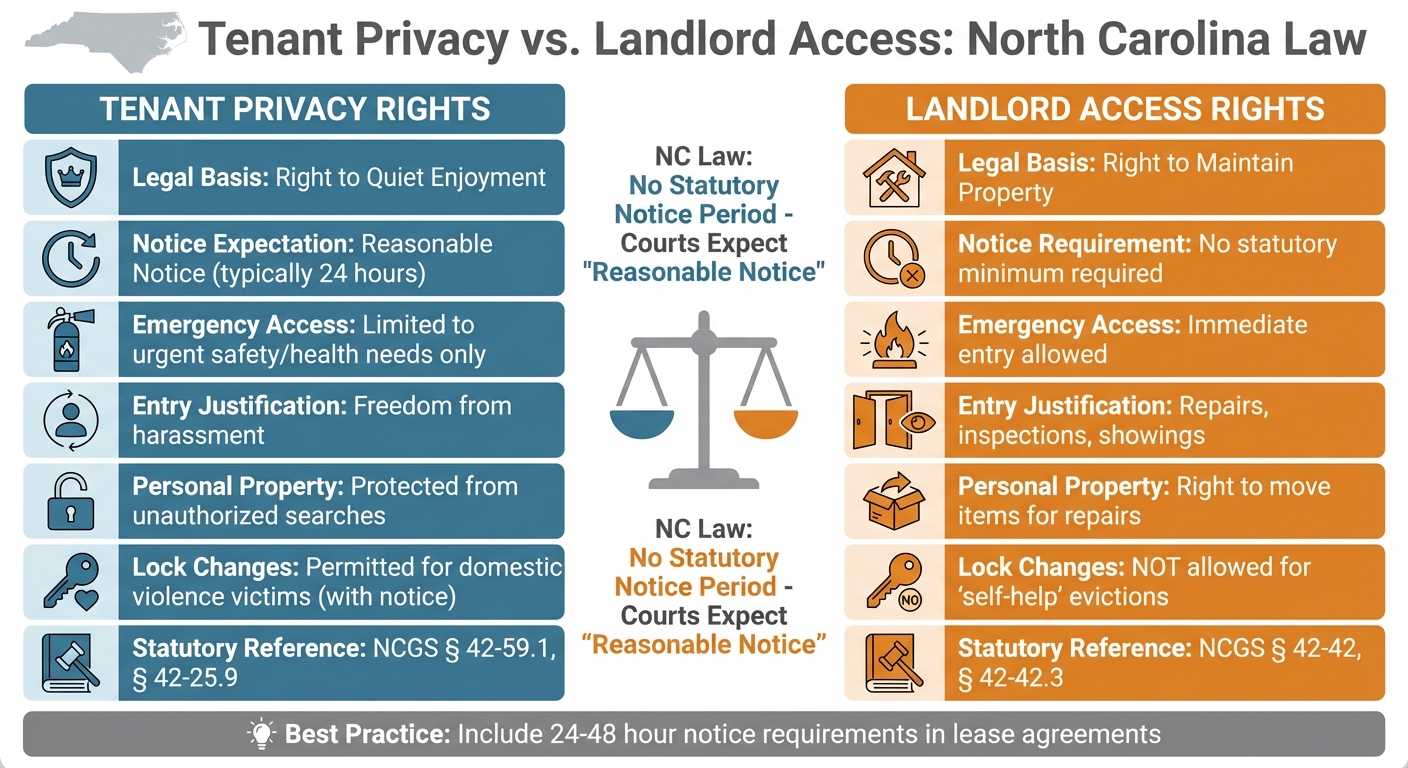
NC Tenant Privacy Rights vs Landlord Access Rights Comparison
Balancing tenant privacy and landlord access in North Carolina can be tricky due to the state’s unique legal framework. Unlike many other states, North Carolina doesn’t have a statutory notice requirement. Instead, it relies on common law principles of "reasonableness", leaving both landlords and tenants to interpret what’s fair under the circumstances. Here’s a closer look at the rights on both sides.
Tenant privacy focuses on the right to live without unnecessary disruptions or intrusions. This means landlords can’t drop by unannounced repeatedly, rummage through personal belongings, or enter the property at odd hours – like 2:00 AM – unless there’s an emergency. Attorney Delton Barnes sums it up well:
"Your landlord may own the property, but once you rent it, it becomes your home. Under North Carolina law, landlords are not allowed to enter your residence arbitrarily or without notice."
On the other hand, landlord access rights stem from their obligation to maintain a livable property, as outlined in N.C. Gen. Stat. § 42-42. Landlords have the right to access the property for necessary repairs, safety checks, or to address issues like plumbing or electrical problems. In emergencies – such as a fire or flood – these access rights take precedence over privacy concerns.
The lack of a statutory notice period in North Carolina often leads to disputes. Courts generally lean toward a "reasonable notice" standard, which is typically 24 hours for non-emergency situations. However, what qualifies as "reasonable" can differ depending on the situation. To avoid misunderstandings, landlords and tenants are encouraged to include specific notice requirements (like 24 or 48 hours) in their lease agreements.
Comparison Table: Privacy Protections vs. Access Permissions
Here’s a quick breakdown of the key differences:
| Feature | Tenant Privacy Rights | Landlord Access Rights | NC Statutory Reference |
|---|---|---|---|
| Legal Basis | Right to Quiet Enjoyment | Right to Maintain Property | NCGS § 42-42 |
| Notice Requirement | Expectation of "Reasonable Notice" | No statutory minimum notice required | N/A (Silent) |
| Emergency Access | Limited to urgent safety/health needs | Immediate entry allowed | Common Law / Case Law |
| Entry Justification | Freedom from harassment | Repairs, inspections, or showings | NCGS § 42-42 |
| Personal Property | Protection from unauthorized searches | Right to move items for repairs | Case Law |
| Lock Changes | Permitted for domestic violence victims (with notice) | Not allowed for "self-help" evictions | NCGS § 42-42.3 |
This comparison highlights how the balance between tenant privacy and landlord access often hinges on clear communication and well-drafted lease agreements.
Legal Notice Requirements and Best Practices for Landlords
Navigating the fine line between tenant privacy and landlord access requires careful attention to notice practices. In North Carolina, there’s no specific law outlining how much notice a landlord must give before entering a rental property. Instead, the tenant’s right to "quiet enjoyment" and what courts deem "reasonable" guide these situations.
While the law doesn’t mandate a notice period, standard industry practice suggests providing at least 24 hours’ written notice for non-emergency entries. Some experts, like attorney Ann O’Connell, recommend going further:
"A good rule of thumb is that landlords should give at least 48 hours written notice when the reason for entry isn’t urgent, and should enter only during reasonable daytime hours".
Since North Carolina law doesn’t spell out these requirements, adhering to such best practices can help landlords avoid disputes and ensure smoother tenant relationships.
The Importance of Clear Communication
Written communication is essential for setting expectations and reducing misunderstandings. Landlords should include specific notice requirements and reasons for entry – like repairs, inspections, or showings – in the lease agreement. For instance, whether the notice period is 24 or 48 hours, spelling it out in the lease is key. If showing the property to prospective buyers or tenants isn’t mentioned in the lease, landlords must secure the tenant’s consent before each instance.
Although verbal notice is legally allowed, written notice is a safer route. Sending notice via email, text, or a written letter creates a documented record, which can protect landlords in case of disputes. Keeping a log of notices and entry times is another smart step to guard against claims of illegal entry or violations of the tenant’s right to quiet enjoyment.
Streamlined Practices in Property Management
Unicorn Rentals (https://unicornrentals.us), a property management company serving Raleigh, Durham, Chapel Hill, and the Triangle area, has adopted standardized notice procedures as part of its services. By integrating clear communication and thorough documentation into maintenance and inspections, the company helps landlords stay compliant while fostering positive tenant relationships. This systematic approach ensures both legal protection and tenant satisfaction.
Common Scenarios and Practical Solutions
These examples highlight how landlords can navigate their legal responsibilities with professional property management in Durham while respecting tenant privacy.
Routine Inspections vs. Tenant Privacy
Landlords need to strike a balance between inspecting their property and respecting a tenant’s right to privacy. In North Carolina, there’s no set legal requirement for notice periods, but frequent, unannounced visits can violate a tenant’s right to quiet enjoyment.
A good approach is to limit inspections and notify tenants in writing beforehand, a practice often handled by property management in Chapel Hill. Instead of monthly walk-throughs, aim for quarterly or semi-annual inspections. Focus on common areas or visible maintenance issues rather than personal spaces. To avoid misunderstandings, include clear inspection schedules and notice requirements – such as providing 24 to 48 hours’ notice – in the lease agreement from the start.
For emergency situations, however, different rules apply to ensure quick action while still respecting tenant boundaries.
Emergency Repairs and Immediate Access
In cases of genuine emergencies – like a burst pipe, fire, or gas leak – landlords can enter the property without prior notice. These situations must present an immediate risk to health, safety, or the property itself. Minor issues, like a dripping faucet, don’t meet this threshold.
Even in emergencies, it’s important to notify the tenant by call or text before entering, if possible. Keep detailed records of the entry, including the time, the nature of the emergency, and any repairs made. Limit access to only the areas necessary to resolve the issue, and document everything with photos and timestamps for clarity and accountability.
2026 Updates to NC Landlord-Tenant Laws
North Carolina’s latest legislative updates bring some noteworthy changes for landlords and tenants, especially concerning landlord access and tenant privacy. Staying informed about these adjustments is essential for compliance.
One of the most impactful updates is the expedited removal process for squatters, which takes effect on December 1, 2025. This law allows landlords to remove squatters – individuals without a legal claim to the property – much faster. Here’s how it works: sheriffs must serve papers within 24 hours, courts are required to hold a hearing within 48 hours of service, and squatters must vacate within 4 hours once a removal order is issued. It’s important to note that this process does not apply to holdover tenants (those who stay after their lease ends). For such cases, landlords still need to follow traditional eviction procedures. Brandon Davis from Henderson Properties highlights the importance of these changes:
"North Carolina has always been considered a relatively landlord-friendly state, but the past two legislative sessions brought several important changes that landlords can’t afford to ignore".
Another update involves renters’ insurance requirements. While landlords can require tenants to carry renters’ insurance, they can no longer mandate a specific insurance provider. If tenants fail to provide proof of insurance within three days of a landlord’s request, the landlord is permitted to purchase a policy on the tenant’s behalf. The cost of the policy, plus a small administrative fee, can then be charged to the tenant. This change means landlords should review their lease agreements and remove language specifying "approved" or "preferred" insurance providers.
Property damage penalties have also been revised. Intentional property damage exceeding $1,000 is now classified as a Class I felony instead of a misdemeanor. This underscores the importance of thorough documentation to address any disputes over damage.
Lastly, updates to attorney’s fees in eviction appeals limit when landlords can recover fees. Now, landlords can only recover attorney fees if they win the case and the tenant’s appeal is determined to be in "bad faith." As Henderson Properties explains:
"Fees in appeals will now be the exception, not the norm, unless there’s clear evidence of bad-faith behavior".
These updates are part of a broader effort to refine the balance between tenant rights and landlord responsibilities under North Carolina law.
Conclusion
Finding the right balance between tenant privacy and landlord access hinges on clear communication, well-defined lease terms, and mutual respect. Landlords who include specific notice requirements in the lease can sidestep potential conflicts from the outset.
In practice, sticking to documented agreements and maintaining thorough records protects both sides. A respectful landlord-tenant dynamic is built on two key principles: tenants deserve the right to enjoy their home without unnecessary interference, while landlords must have reasonable access for essential repairs, maintenance, or true emergencies. As Ann O’Connell, Attorney at UC Berkeley School of Law, puts it:
"A basic understanding of the state’s laws is enough to help both landlords and tenants solve most issues they face without assistance from a lawyer."
With around 1.3 million renter households in North Carolina – accounting for roughly one-third of the state’s population – these concerns impact a significant number of people.
Good documentation is your strongest safeguard. Keeping written records of repair requests, entry notices, and lease agreements can prevent confusion and serve as evidence in case of disputes. Scheduling non-emergency visits during reasonable daytime hours and ensuring tenants don’t unnecessarily withhold consent for needed repairs fosters cooperation. This approach helps maintain a positive relationship that works for everyone involved.
For landlords looking to simplify compliance and build strong tenant relationships, professional property management can make a big difference. Services like Unicorn Rentals (https://unicornrentals.us) offer comprehensive solutions, including 24/7 maintenance coordination, property inspections, and tenant communication. These services help landlords meet legal requirements while respecting tenant privacy, especially in the Triangle area.
FAQs
Can I refuse entry if my landlord gives no notice?
Yes, you can deny entry if your landlord fails to provide notice. In North Carolina, tenants are entitled to the right to quiet enjoyment of their rental property. Landlords are allowed to enter for valid reasons, such as emergencies or necessary repairs. However, unless your lease specifies otherwise, there’s no explicit legal requirement for advance notice. That said, landlords are still expected to act reasonably and respect your privacy.
What counts as an emergency entry in North Carolina?
In North Carolina, landlords are permitted to enter a rental property without prior notice in cases of emergencies or urgent repairs. This type of entry, known as an emergency entry, is allowed under state law to prioritize tenant safety and protect the property from potential harm.
What should I do if my landlord keeps entering unannounced?
If your landlord enters your home without warning, you can remind them of your right to quiet enjoyment under North Carolina law. Generally, this law requires landlords to give advance notice before entering, except in emergencies. Be sure to document every instance when this happens. If the problem continues, you might want to consult a lawyer or reach out to local authorities to safeguard your privacy. Repeated unannounced visits could be a breach of tenant privacy laws.
Related Blog Posts
- The Landlord’s Guide to Avoiding Eviction: Legal Steps and Best Practices for NC Rental Owners
- How to Reduce Vacancy Time in Raleigh Rental Properties: 9 Proven Strategies
- How to Handle Power Outages in Triangle NC Rentals
- Ultimate guide to Human Trafficking Awarness Requirments for Raleigh-Durham Short Term Rentals